Tell us about the job
Takes about a minute. No obligation.
A heat pump in Sanpete County earns most of its wear in heating mode, which is where the hard work sits. Homes in Sanpete County, UT run heat about ten months a year, from September through June. The reversing valve cycles between modes whenever the outdoor coil frosts over, and the defrost board controls that switching. Both components accumulate stress across a long heating season in ways that show up as intermittent faults first, then outright failures. A contractor diagnosing a heat pump here checks the defrost cycle early, because that is where the season's load lands.
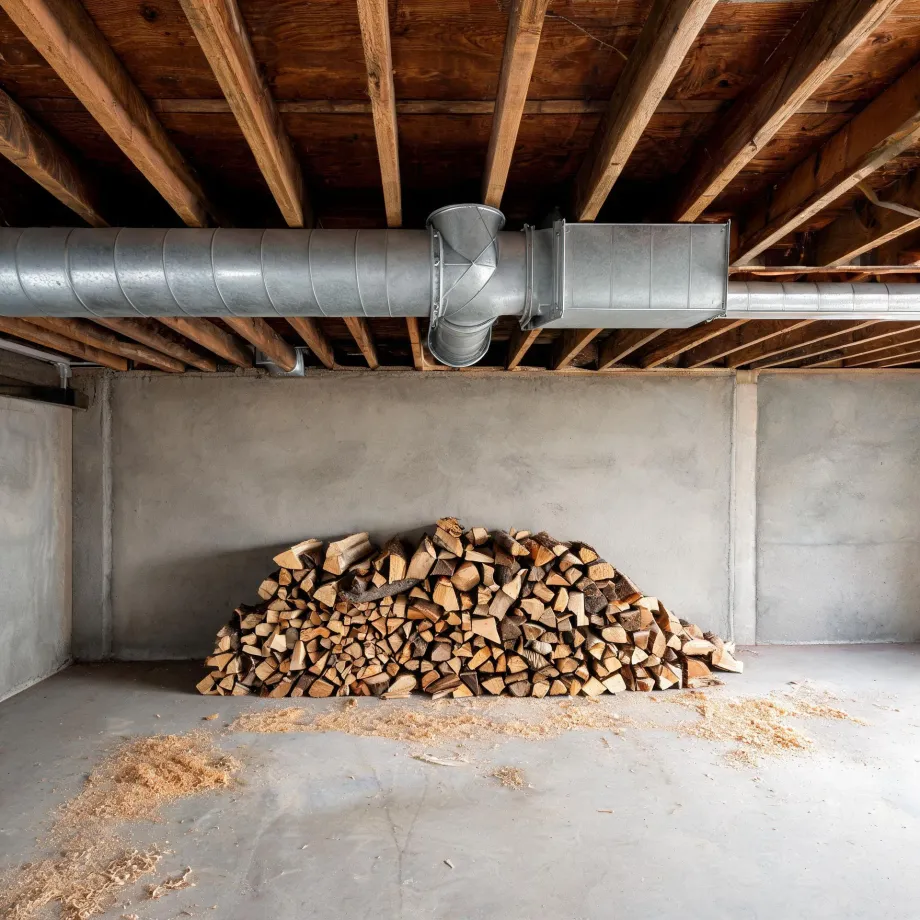
Ductwork laid in for an earlier generation of equipment carries a record of every system that has run through it since. When a heat pump fails in a house from this part of Sanpete County's housing stock, what the opened unit reveals is specific: worn contactors, refrigerant lines that have been accessed and re-accessed, electrical connections that reflect more than one contractor's hand. Half the homes in Sanpete County, Utah were built in 1985 or earlier (2020-2024 ACS 5-year). That history is why a repair quote here depends on what the technician finds inside the unit, not on what the house looks like from the street. Parts availability for a system this far into its service life narrows the options before the scope is even written.
The Parts of a Heat Pump a Contractor Checks During Repair
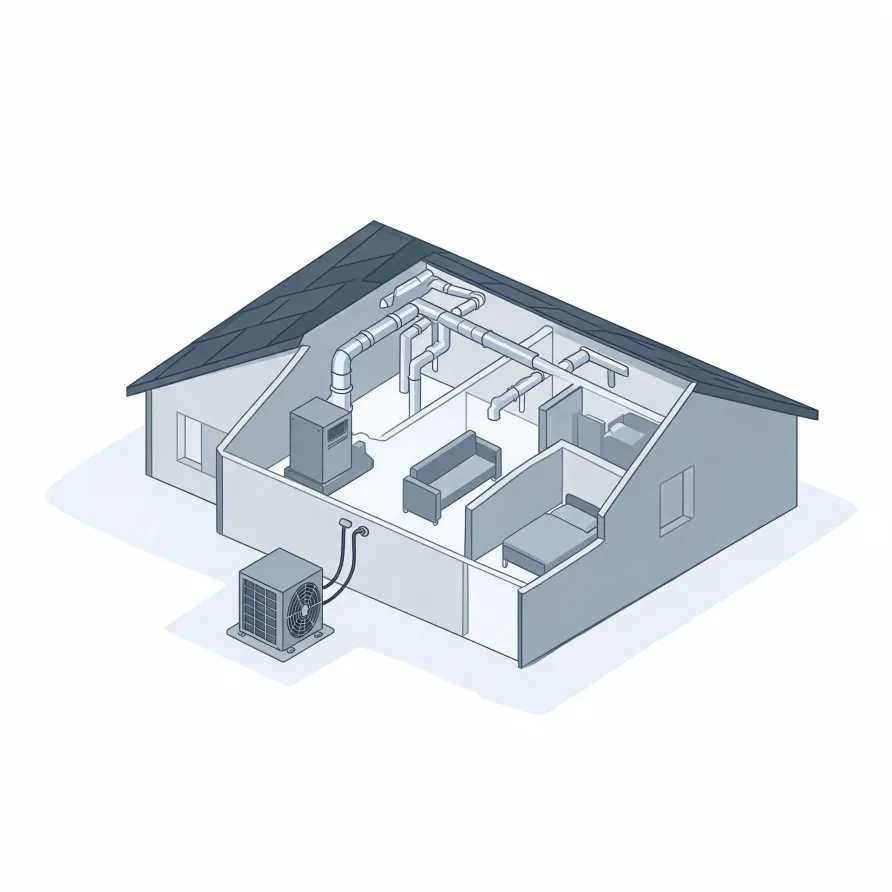
The outdoor unit is where most repairs begin. It holds the compressor, which pressurizes the refrigerant, and the condenser coil, which sheds heat to the outside air. When the system runs but fails to heat or cool the house, or makes noise under load, the compressor and that coil are where a contractor looks first.
Inside the house, the air handler contains the evaporator coil and the blower fan. The evaporator coil is a common source of refrigerant leaks and ice buildup. The blower fan, the expansion valve, and the reversing valve, which is the part that lets a heat pump switch between heating and cooling, are all pieces a contractor will test when the system behaves differently in one mode than the other.
The drawing shows a typical heat pump layout, and a licensed contractor determines which components apply to your specific home and situation.
Get matched in Sanpete CountySanpete County, by the numbers
62 severe weather events were recorded in Sanpete County, Utah between 2015 and 2024.
NOAA National Centers for Environmental Information, Storm Events Database, bulk CSV export, events 2015-01-01 through 2024-12-31.Half the homes in Sanpete County, Utah were built in 1985 or earlier (2020-2024 ACS 5-year).
U.S. Census Bureau, 2020-2024 American Community Survey 5-Year EstimatesSanpete County, Utah holds 10,578 housing units (2020-2024 ACS 5-year).
U.S. Census Bureau, 2020-2024 American Community Survey 5-Year EstimatesOwners occupy 74.3% of the occupied homes in Sanpete County, Utah (2020-2024 ACS 5-year).
U.S. Census Bureau, 2020-2024 American Community Survey 5-Year EstimatesRules & Standards Governing Heat Pump Repair in Sanpete County, Utah2 sourced rules and standards
What Sanpete County, Utah Requires for HVAC Repair
Utah’s contractor licence does not reach alteration, repair, remodelling or improvement of a building worth less than $7,000 in labour and materials together, counting every change and addition to the agreed work — though the plumbing and electrical trades are pulled back under licensure even below that figure.
Utah requires a state licence before engaging in a licensed construction trade or contracting activity, and HVAC contractor is one of the licence classifications the state issues.
Severe Weather Events in Sanpete County
Extreme weather puts heat pumps under stress, and how hard a system works over time shapes what it needs in the way of repair. The chart below tracks recorded severe weather events in this area year by year, because local conditions are part of what a contractor is dealing with when they service your equipment.
62 severe weather events, 2015–2024. Source: NOAA National Centers for Environmental Information, Storm Events Database.