Tell us about the job
Takes about a minute. No obligation.
A heat pump working a repair call in Uintah County has almost always spent most of its life in heating mode, which puts the reversing valve, the coil, and the defrost controls under load that a mixed-use system elsewhere never sees. Homes in Uintah County, UT run heat about nine months a year, from September through May. The refrigerant circuit in heating mode runs colder outdoor temperatures than it does in summer, and those conditions are harder on compressor valves and the defrost board than warm-weather cycles are. A contractor quoting a repair here checks those components first, because that is where accumulated wear shows up.
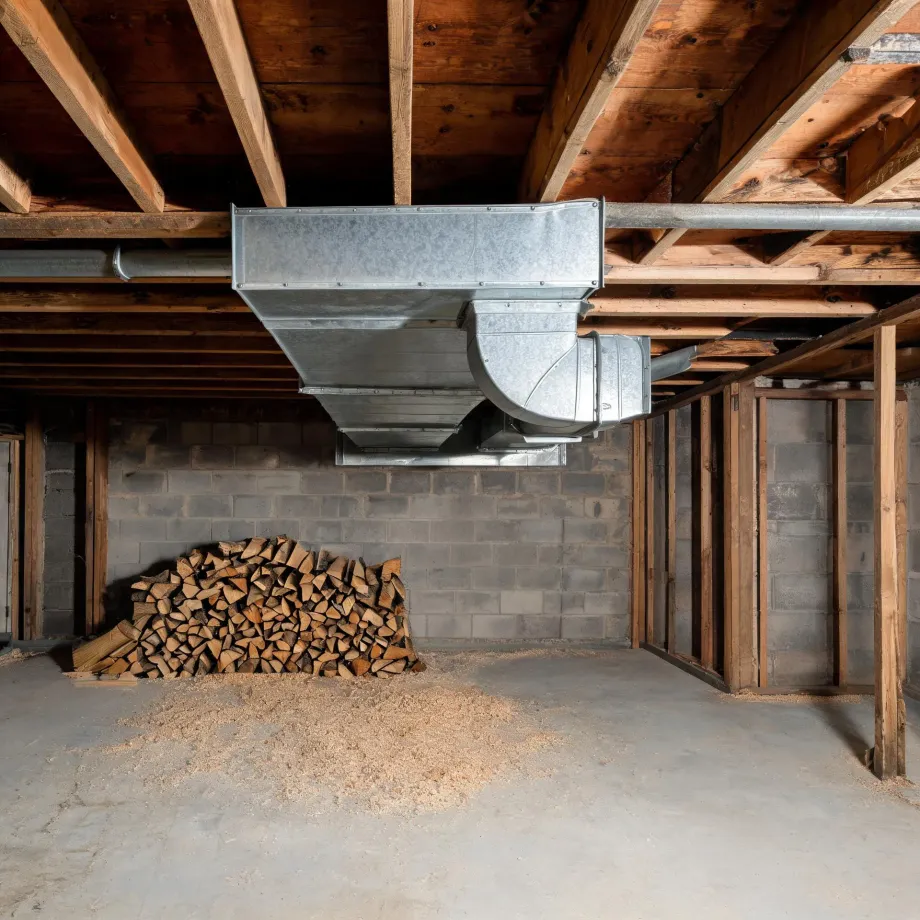
Stock built to house earlier generations of heating and cooling carries years of wear in the places a technician has to open before the unit itself tells them anything useful. Half the homes in Uintah County, Utah were built in 1992 or earlier (2020-2024 ACS 5-year). That means when a heat pump in this county is pulled apart for diagnosis, the condition of the electrical connections, the state of the refrigerant lines, and what the internal components have collected are the variables that drive the repair scope. Parts availability for systems running in housing this age is a real question a contractor checks before quoting, because what a unit needs and what a supplier stocks are not always the same answer.
The Parts of a Heat Pump a Contractor Checks First
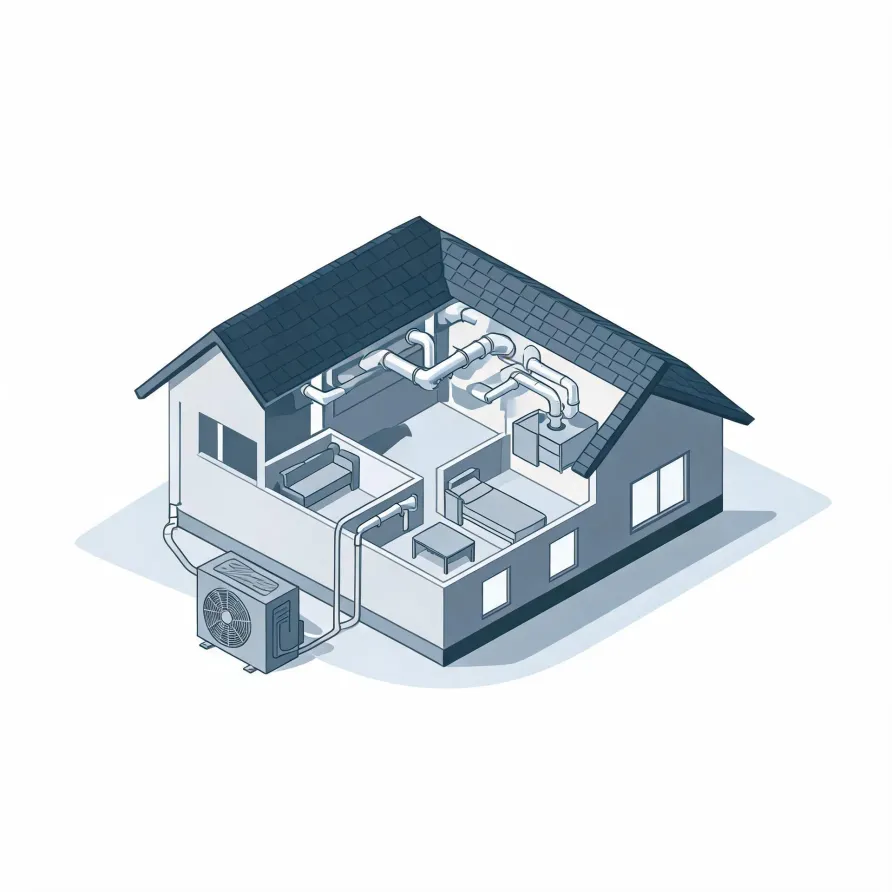
The outdoor unit is the piece most homeowners recognize: a metal cabinet that sits on a pad beside the house and holds the compressor and the outdoor coil. The compressor is where most repair calls begin. When it struggles or fails, the system loses its ability to move heat in either direction. The outdoor coil can collect damage from debris or corrosion, and that shows up as poor performance.
Inside the house, the air handler holds the indoor coil and the blower fan, which pushes conditioned air through the home. The reversing valve, tucked inside the outdoor cabinet, is the part that lets the system switch between heating and cooling. A contractor will also check the expansion valve and the refrigerant lines that connect both units, since a leak or a blockage there affects the whole system.
The drawing shows a typical heat pump layout, and a licensed contractor will determine which parts apply to your specific house and situation.
Get matched in Uintah CountyUintah County, by the record
101 severe weather events were recorded in Uintah County, Utah between 2015 and 2024.
NOAA National Centers for Environmental Information, Storm Events Database, bulk CSV export, events 2015-01-01 through 2024-12-31.Half the homes in Uintah County, Utah were built in 1992 or earlier (2020-2024 ACS 5-year).
U.S. Census Bureau, 2020-2024 American Community Survey 5-Year EstimatesUintah County, Utah holds 13,838 housing units (2020-2024 ACS 5-year).
U.S. Census Bureau, 2020-2024 American Community Survey 5-Year EstimatesOwners occupy 73.5% of the occupied homes in Uintah County, Utah (2020-2024 ACS 5-year).
U.S. Census Bureau, 2020-2024 American Community Survey 5-Year EstimatesCodes & Standards Governing Heat Pump Repair in Uintah County, Utah2 sourced rules and standards
Licensing Rules for Contractors in Uintah County, Utah
Utah’s contractor licence does not reach alteration, repair, remodelling or improvement of a building worth less than $7,000 in labour and materials together, counting every change and addition to the agreed work — though the plumbing and electrical trades are pulled back under licensure even below that figure.
Utah requires a state licence before engaging in a licensed construction trade or contracting activity, and HVAC contractor is one of the licence classifications the state issues.
Weather Events in Uintah County That Stress HVAC Equipment
Extreme weather puts heat pumps under load at exactly the moments they are hardest to run. How much of that pressure a unit absorbs over time is a local fact, and it shapes what repair work in Uintah County looks like.
101 severe weather events, 2015–2024. Source: NOAA National Centers for Environmental Information, Storm Events Database.