Tell us about the job
Takes about a minute. No obligation.
A heat pump running heat through winter is working its hardest when outdoor temperatures are lowest, and that is exactly when the compressor and reversing valve take the most strain. Homes in Iron County, UT run heat about eight months a year, from October through May. A contractor called out for a repair in Iron County checks those two components early, because the heating load is where the wear concentrates. Refrigerant pressure, valve response, and compressor draw tell the story of what the system has been carrying. Coil condition and the defrost cycle get the same attention, since both degrade under sustained cold-weather operation.
Ductwork put in for an older system, running a heat pump that came in after the fact, accumulates a service record spread across more than one unit. Half the homes in Iron County, Utah were built in 1997 or earlier (2020-2024 ACS 5-year). That gap between the building and what runs in it now means a contractor opening a heat pump here is working with components that may each carry a different maintenance history: original air handler, replaced compressor, newer refrigerant lines spliced to older fittings. Parts availability is the variable that settles how the repair goes. When the unit predates current production runs by a meaningful margin, a contractor has to confirm that the components the system actually takes are still manufactured before the scope of repair is set.
The Parts of a Heat Pump a Contractor Checks First
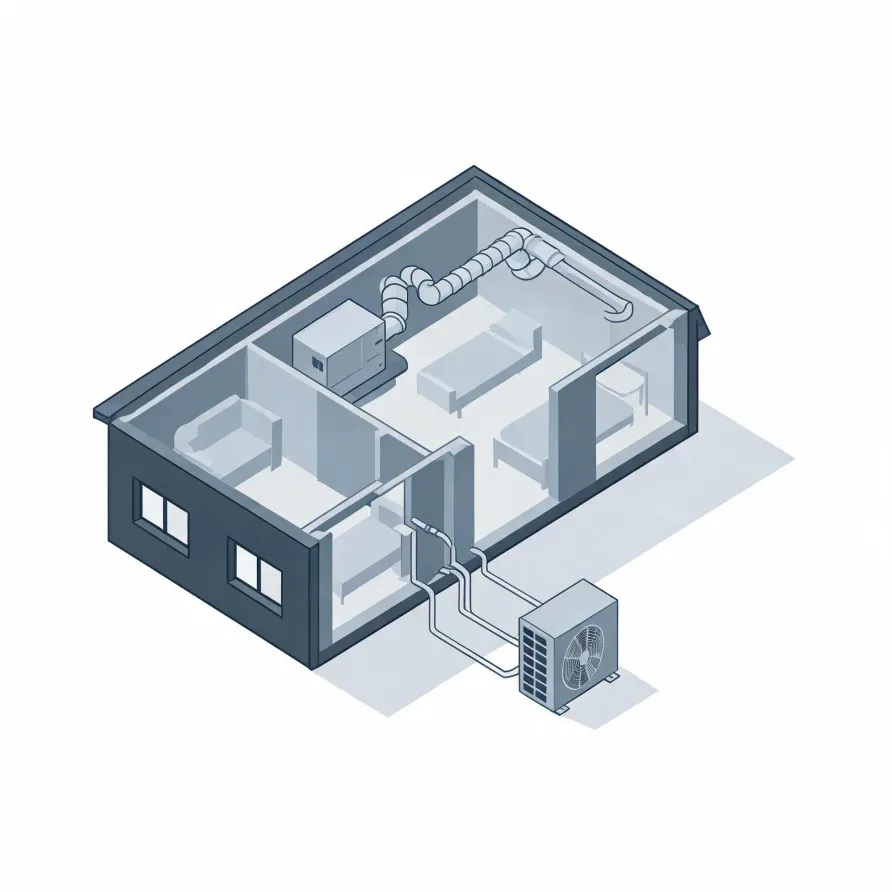
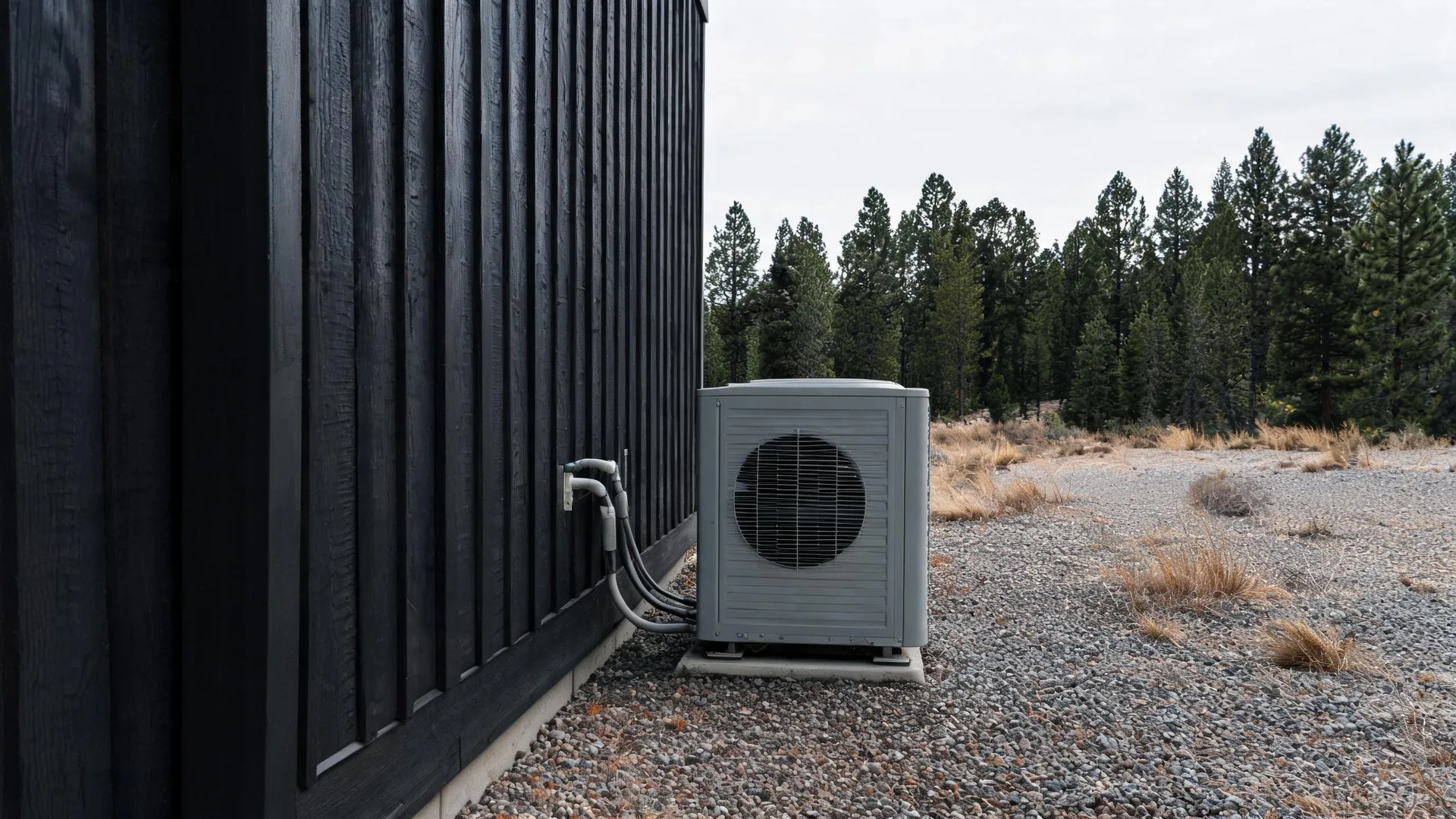
The outdoor unit sits on a pad beside the house and holds the compressor, which pressurizes the refrigerant, and the condenser coil, which moves heat between the refrigerant and the outside air. When the system stops heating or cooling, the compressor and its capacitor are the first things a contractor looks at. A refrigerant leak or a failed reversing valve, which switches the system between heating and cooling modes, also shows up here.
Inside the house, the air handler contains the blower motor and the evaporator coil, which pull heat from or push it into the air moving through your home. The expansion valve, which controls refrigerant flow between the two units, sits on the refrigerant line and is another point a contractor checks when pressures are off. A failed blower motor or a frozen coil will trace back to this cabinet.
The drawing shows a typical heat pump layout, and a licensed contractor assesses which parts apply and what condition they are in for your specific home.
Get matched in Iron CountyIron County, Utah, by the numbers
77 severe weather events were recorded in Iron County, Utah between 2015 and 2024.
NOAA National Centers for Environmental Information, Storm Events Database, bulk CSV export, events 2015-01-01 through 2024-12-31.Half the homes in Iron County, Utah were built in 1997 or earlier (2020-2024 ACS 5-year).
U.S. Census Bureau, 2020-2024 American Community Survey 5-Year EstimatesIron County, Utah holds 23,550 housing units (2020-2024 ACS 5-year).
U.S. Census Bureau, 2020-2024 American Community Survey 5-Year EstimatesOwners occupy 68.3% of the occupied homes in Iron County, Utah (2020-2024 ACS 5-year).
U.S. Census Bureau, 2020-2024 American Community Survey 5-Year EstimatesCodes & Standards Governing Heat Pump Repair in Iron County, Utah2 sourced rules and standards
Licensing and Legal Requirements in Iron County, Utah
Utah’s contractor licence does not reach alteration, repair, remodelling or improvement of a building worth less than $7,000 in labour and materials together, counting every change and addition to the agreed work — though the plumbing and electrical trades are pulled back under licensure even below that figure.
Utah requires a state licence before engaging in a licensed construction trade or contracting activity, and HVAC contractor is one of the licence classifications the state issues.
Weather That Works Your Heat Pump in Iron County
Extreme weather puts a heat pump under load in ways that routine use does not. Repair needs in Iron County track closely with what the climate demands of the equipment, which is why local weather history belongs alongside a conversation about local HVAC service.
77 severe weather events, 2015–2024. Source: NOAA National Centers for Environmental Information, Storm Events Database.