Why your heat pump won't turn on in Utah
Why won't my heat pump turn on?
With gas heat so common around Utah, most people don't deal with a heat pump until the system in front of them stops responding. You go to the thermostat expecting heat or cool air, nothing happens, and you're left checking if it's broken or just waiting on something simple like a breaker or a setting.
Usually a tripped breaker, a thermostat setting, or a frozen outdoor unit
Most of the time it's one of a few things. The breaker for the outdoor unit or the air handler tripped and needs to be reset. The thermostat is set to the wrong mode or the batteries died, so it isn't sending a signal at all. Or the outdoor unit has iced over, which stops it from running until it defrosts. Power here is cheap enough that people don't think twice about running the heat pump, so when it suddenly goes quiet it stands out fast. If the breaker won't stay reset, or the outdoor unit is frozen with no clear reason, that points to something electrical or mechanical that needs a closer look.




Is this just your thermostat, or the whole system?
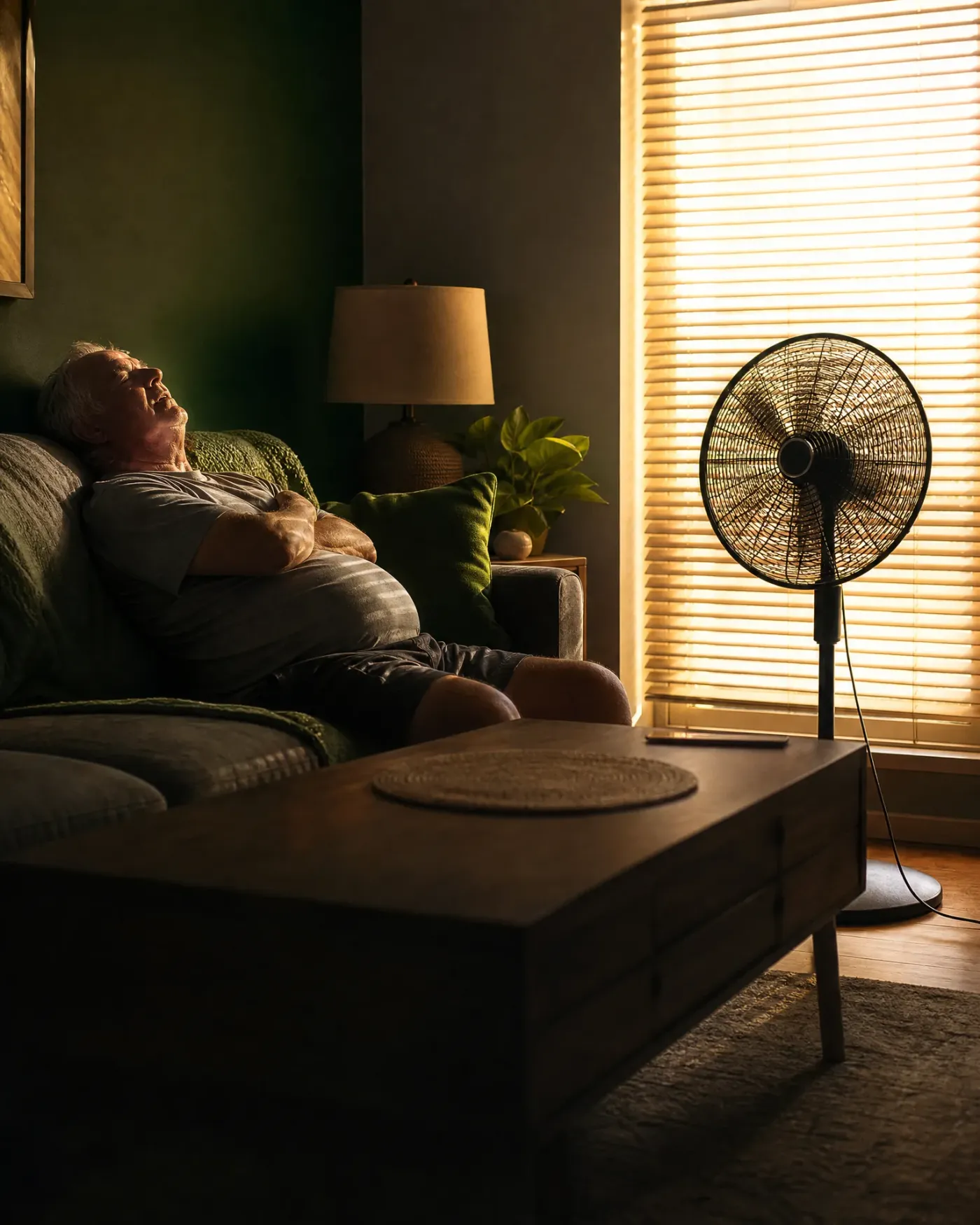
You bump the thermostat up or down and wait for the familiar hum outside. Nothing. The display might be lit, or it might be dark. Inside, the air handler stays silent, no fan, no airflow at the vents. Outside, the unit sits still when it should be running, no hum from the compressor, no spinning fan blade. Sometimes you'll hear a faint click or buzz and then quiet, which points somewhere different than total silence. If this is happening during a stretch of hot, dry days, the house will warm up fast once the system stops responding, and that matters most if anyone home is older, very young, or sensitive to heat.
Why the outdoor unit matters most
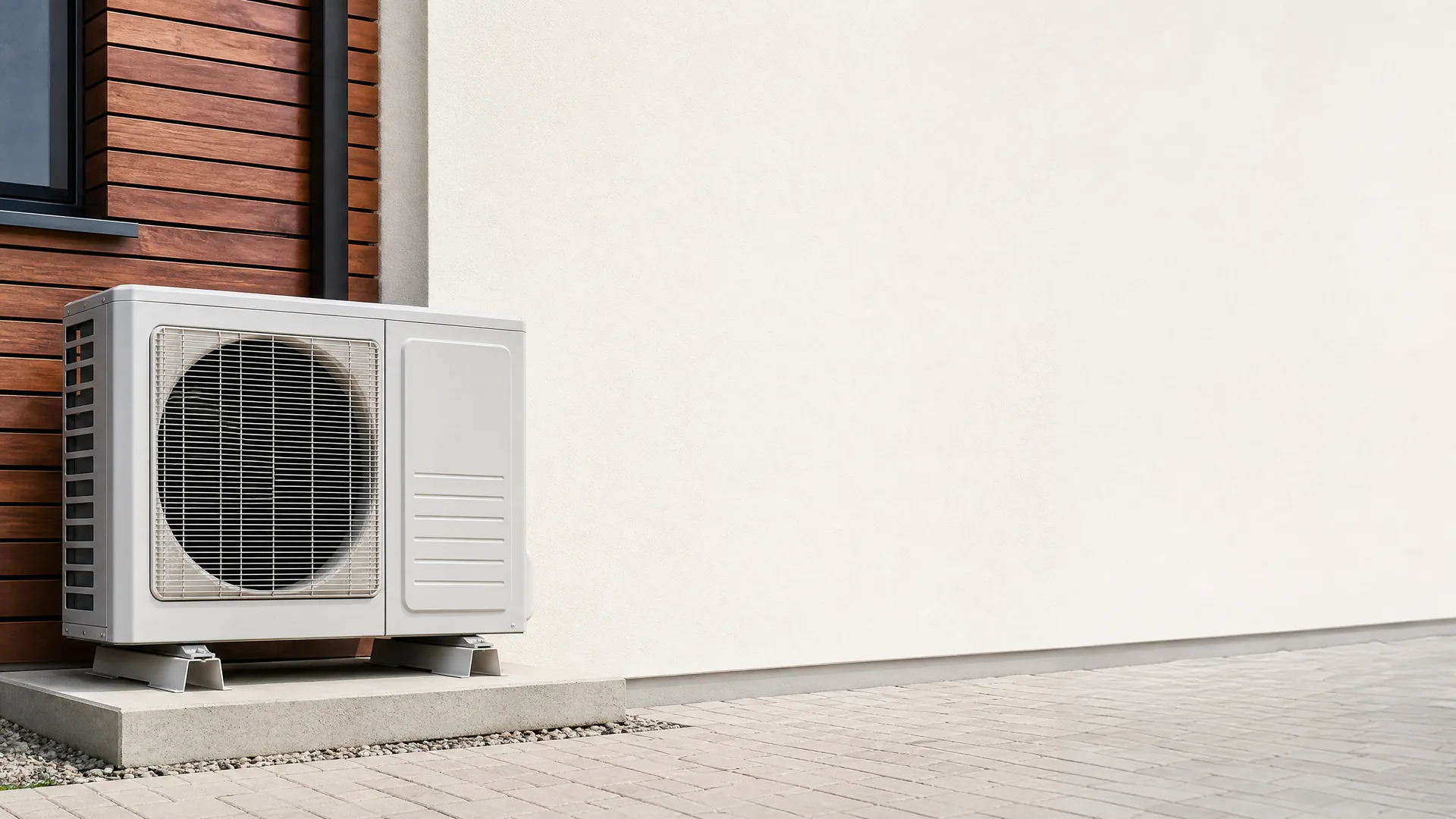
A heat pump works by moving heat, and most of that work happens outside. If the outdoor unit sits dead quiet while you fiddle with the thermostat, check the breaker panel first. Heat pumps often share a disconnect box mounted right on the wall near the unit. That small switch gets bumped, left off after other work, or trips on its own. Before you decide the system is broken, confirm the outdoor unit has power at all. No hum, no fan spin, no vibration usually points there before it points to anything inside.
What cold mornings do to it
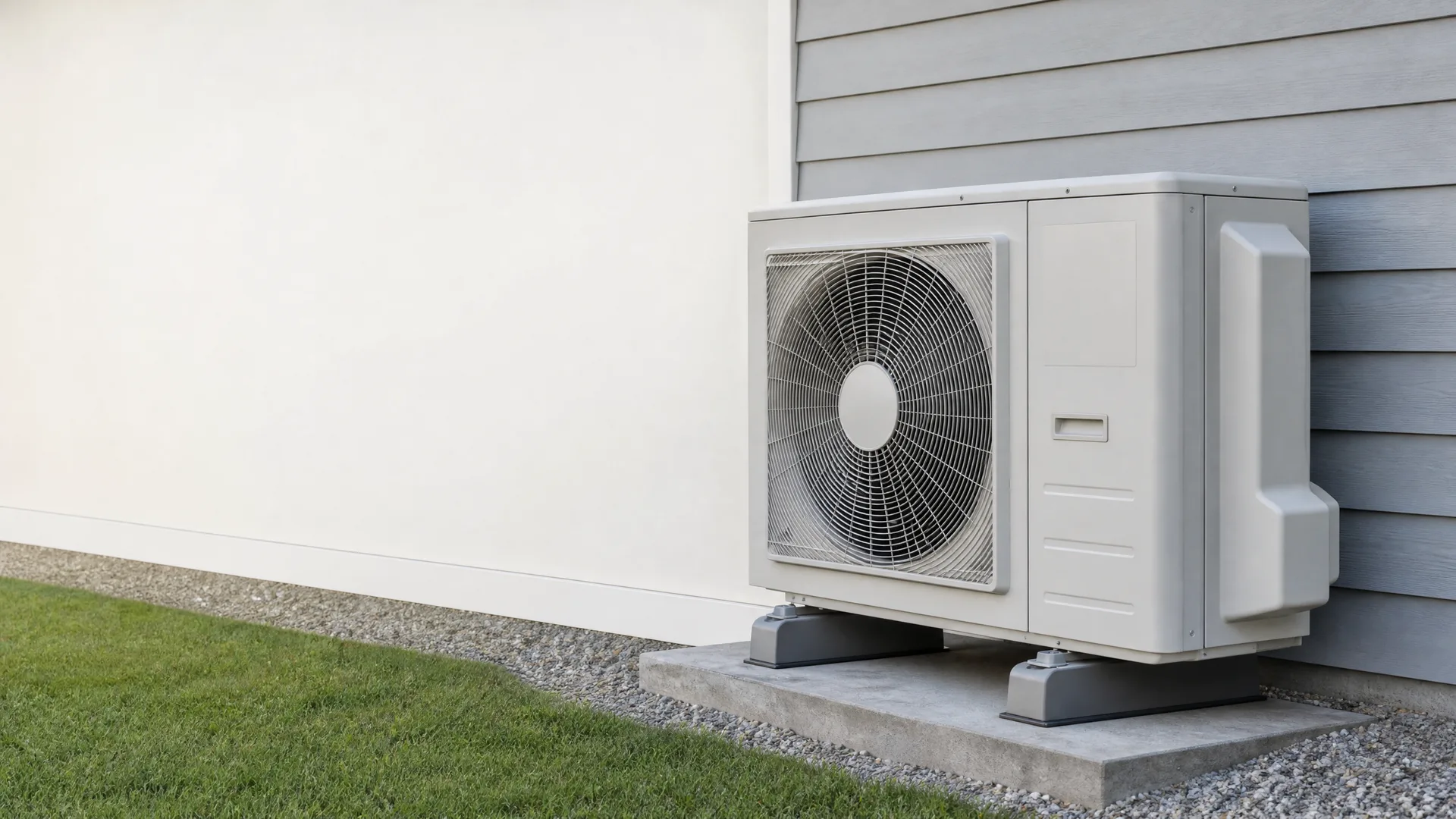
Utah winters push heat pumps into defrost cycles more than people expect, even with gas heat common in most homes here. During defrost, the outdoor fan stops and the system reverses briefly to melt frost off the coil. If you catch it mid-cycle, it can look like the unit failed. This normally lasts a few minutes and the system resumes on its own. If the outdoor coil stays iced over well past that, or the fan never restarts, something in the defrost control itself has stopped working correctly.
Power costs 13.02 cents per kilowatt-hour statewide
At 13.02 cents per kilowatt-hour, running your heat pump here doesn't carry the sting it does in a lot of other states. That's worth knowing before you assume a dead system is about cost cutting. If yours won't turn on, something's actually wrong, not just switched off to save money.
EIA-861 2025 statewide residential average
What Actually Happens When You Turn It On
- A heat pump needs a call for power, a call from the thermostat, and a response from the outdoor unit before it ever starts moving heat.
- The control board inside the air handler reads the thermostat signal first, and if that board has no power, nothing downstream gets a command at all.
- A low voltage fuse on the control board blows when something else in the system shorts, and that alone will stop the whole unit cold.
- Most heat pumps run a defrost cycle in winter, and a unit stuck in defrost can sit idle for several minutes before it switches back to heating.
- The reversing valve tells the system whether to heat or cool, and a valve stuck in one position can make the unit act like it won't turn on at all.
- If the outdoor fan spins but no warm or cool air follows, the problem usually sits inside at the air handler, not outside at the compressor.
A heat pump isn't one switch. It's a chain of steps, and each one has to pass its signal to the next before you get warm or cool air. The thermostat sends a low voltage signal to the control board in the air handler. That board checks for power, reads the call, and sends commands out to the outdoor unit and the indoor fan. Break any link and the whole chain stops, even if everything downstream of it is fine.
This is why a dead unit doesn't always mean a dead compressor. The control board itself runs off a small fuse, and that fuse is built to blow if something else in the system draws too much current. It's protecting the board, but the result looks the same as a total failure: nothing responds.
Winter adds another wrinkle. Heat pumps pull moisture and frost off the outdoor coil by running periodic defrost cycles, and during one of those cycles the system can sit quiet for several minutes before it switches back. If you check it mid cycle, it can look stuck when it's actually partway through a normal process.
There's also the reversing valve, the part that decides whether the system is heating or cooling. If it sticks in one position, the unit can run the compressor and fan without ever delivering the air you asked for, which from the thermostat looks exactly like nothing happening at all.




Get your heat pump to the right pro
Send the request today and stop worrying about who to call.
Describe your heat pump job, and a local pro who handles it gets in touch.
Asking costs nothing, and the choice to hire stays yours.

A heat pump that won't start leaves the house to find its own temperature
In the middle of summer that means the house climbs toward whatever it is outside, and in Utah's dry heat that happens fast with the sun on the roof all day. In winter, since most homes here lean on gas furnaces, a dead heat pump might just mean one room or one zone stops keeping up, but if your house depends on it for primary heat, a cold morning turns into a cold day. Either way, nobody inside is comfortable, and that's the part you notice before you notice anything about the equipment itself.
You don't have to figure out whether it's the board, the breaker, or the outdoor unit before you get help. Once you send in your information, a contractor who works on heat pumps in your area gets matched to your situation and reaches out to you directly. That's one less thing to sort out while the house sits at the wrong temperature.


Dry air doesn't mean dry for your heat pump. Summer dew points here average 41°F, measured across June, July and August, according to NOAA climate data. That's low, which is part of why Utah summers feel bearable even when the temperature climbs. But a heat pump that won't turn on in that kind of air doesn't get help from the weather. Low humidity means less moisture to pull out of the house, so the unit isn't fighting a heavy load. If it's dead, the problem is electrical or mechanical, not something the dryness caused or is covering for.
NASA POWER T2MDEW county cells weighted by homes
What you can check, what needs a pro
Check yourself
- The breaker for the outdoor unit and the one for the air handler are two separate breakers, and either one tripped stops the system cold.
- The disconnect box mounted on the wall near the outdoor unit has a pull block inside it that can work loose or get bumped out.
- A thermostat with dead batteries goes dark and sends no signal anywhere, even though the wiring behind it is fine.
- Dust banked against the outdoor cabinet or packed into the grille can block airflow enough to shut the unit down.
- A filter clogged enough to choke airflow can trip a safety switch inside the air handler before the system ever starts.
Call a contractor
- A control board that takes the thermostat signal but sends nothing to the outdoor unit needs testing with a meter, not a guess.
- A failed capacitor or contactor inside the outdoor unit won't show from the outside, and the unit stays silent either way.
- Low refrigerant charge can trip a pressure switch that shuts the whole system down before it ever reaches the point of overheating.
- Wiring between the thermostat, the air handler and the outdoor unit can fail in ways that only show up with the panels open.
- A reversing valve or defrost control stuck in the wrong position can keep a heat pump from starting at all, not just from switching modes.


A heat pump that won't turn on almost always comes down to one of a few things: no power getting to it, a thermostat not sending the call, or the outdoor unit blocked or tripped out. Most of that is worth a quick look yourself before anything else. But once you've checked the breakers and the disconnect and it's still dead, the problem is inside the system somewhere, and that's not something to keep poking at on your own. Send in the form and the search for someone qualified stops being on you. You won't be left waiting on hold or working through a list of names, wondering who's actually free to come out. A contractor who knows these systems gets your information and takes it from there, and whether your house is sitting too warm in July or too cold in January, that's one less thing you're carrying while you wait for the house to feel right again.





The right pro for this job
Send it once and finding someone is no longer on you.
No fee to send it, and nothing to sign.