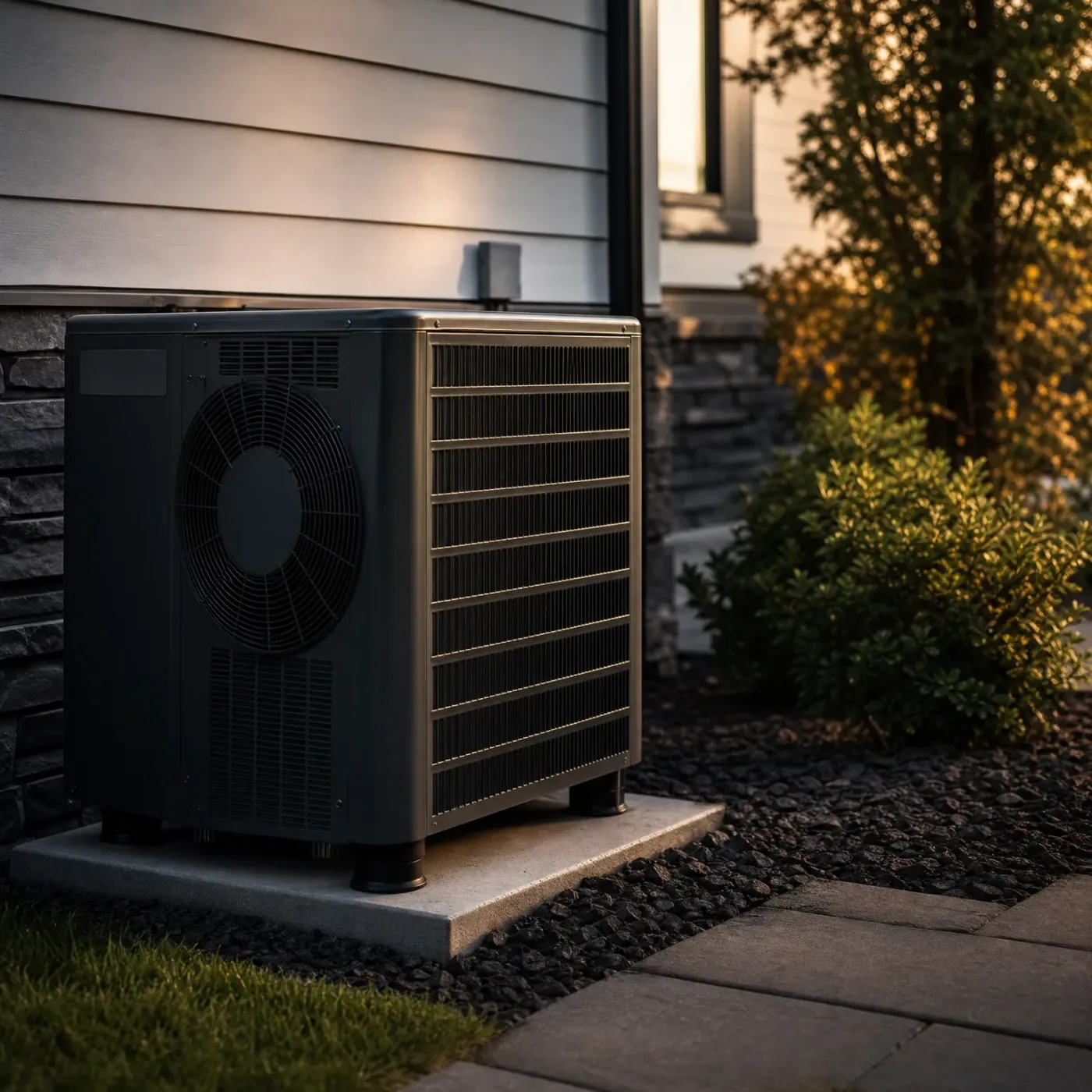
A dark outdoor heat pump unit with a round fan grille and finned coil sits on a concrete pad beside a house with horizontal siding and stone veneer, next to gravel, a paver walkway, grass and shrubs in warm low light.

It's off your list after this

Why your heat pump has ice on it in a Utah winter

Some frost on the outdoor unit during a cold snap is normal. A heat pump that's caked in ice, or icing over again right after it clears, is telling you something is wrong. Below is what causes it and what it means for your system. When you're ready, skip the search for a contractor, the calls, and repeating yourself. Send the form and let someone else take it from here.

Send it today

A little frost on your outdoor unit on a cold morning is normal. Heat pumps pull heat out of cold air, and that process chills the coil enough to form frost, especially on the damp, cold days common in a Utah winter. Every heat pump handles this the same way: it runs a defrost cycle, switching briefly into cooling mode to warm the coil and melt the ice, then switches back. That cycle should leave the coil clear within ten or fifteen minutes. If instead your unit is caked in ice, or the ice keeps coming back right after it clears, the defrost cycle isn't doing its job. That usually points to a stuck reversing valve, a bad defrost sensor or control board, a failing fan motor, or low refrigerant charge. None of those clear up on their own, and running the system while it's iced over puts strain on parts that are expensive to replace. It's worth having someone look at it before the next cold snap.

A bearded man in a navy T-shirt sits on a light-colored couch indoors, smiling while looking down at a laptop screen in the foreground, with a framed picture and a potted plant blurred behind him.
A bearded man in a plaid flannel shirt sits indoors looking out a window at snow-covered trees, with a steaming mug on the sill and wooden kitchen shelves behind him.

Your heat pump is built to handle frost on its own. A sensor on the coil or a board running on a timer watches for ice and calls for a defrost cycle when it's needed. When that happens, a reversing valve flips the system into cooling mode for a few minutes, which sends hot refrigerant out to the coil outside instead of into your house. The outdoor fan shuts off at the same time, so the heat stays put on the coil long enough to melt the ice instead of getting blown off into the air. That's the whole cycle, and on a normal day it runs, clears the frost, and switches back to heating without you ever noticing.

Ice that won't go away usually means one of these steps isn't happening. A reversing valve that's stuck won't let the system switch over, so the defrost cycle never starts. A bad sensor can miss the frost entirely. If the outdoor fan keeps spinning when it should be off, the coil never holds enough heat to melt anything. And if the system is low on refrigerant, the coil runs colder than it's supposed to, building frost faster than a normal defrost cycle can keep up with.

How the defrost cycle works

  • A defrost board on a timer, or a sensor on the coil, tells the unit when to start a defrost cycle.
  • During defrost, a reversing valve switches the system into cooling mode for a few minutes to send hot refrigerant through the outdoor coil.
  • The outdoor fan shuts off during defrost so heat stays on the coil instead of blowing away into the cold air.
  • A stuck reversing valve or a bad defrost sensor means the cycle never starts, and frost keeps building with no way to clear.
  • If the fan keeps running during what should be a defrost cycle, the coil never gets the chance to warm up and melt the ice.
  • Low refrigerant drops the coil temperature further than it should go, so it frosts faster than the defrost cycle can keep up with.

A gray outdoor condenser unit on a concrete pad beside a light-colored horizontal-siding house, with a disconnect box and refrigerant line on the wall, ornamental grasses and a shrub in mulch nearby, and a concrete patio in the foreground.
A thin layer of frost here, clearing on its own within an hour or two, means the defrost cycle is doing its job.
An outdoor air conditioning condenser unit on a concrete pad beside a house with horizontal lap siding, with a green shrub to the left and a wide concrete slab in the foreground.
A heat pump buried in ice like this, sitting on bare concrete with no sign of melt, isn't defrosting at all.
A smiling man in a blue denim shirt over a white tee sits at a light stone kitchen counter with a grey mug and a bowl of oranges and bananas, with pendant lights and shelving behind him.
A smiling bearded man in a grey long-sleeved shirt sits at a kitchen counter with a dark mug, with a dining table, pendant light and glass doors onto greenery behind him.
A bearded man in a dark green knit sweater smiles and looks off to the side while standing at a kitchen counter with a white mug of coffee, with open shelving, a potted tree, and a dining table near large windows behind him.
A man with dark curly hair in a dark green sweater stands smiling and looking to the side in a kitchen with white cabinets, a potted plant, a stone countertop with a ceramic mug, and a dining area with framed art in the background.

Why does my heat pump keep icing back up right after it defrosts?

You watched the ice melt off, maybe even saw steam coming off the coil during defrost, and an hour later it's crusted back over. That pattern, clear then ice again, clear then ice again, is different from a unit that just has a slow defrost cycle. It usually means the system is defrosting on schedule but not fixing whatever is making it frost up so fast in the first place.

Something is making the coil run colder than it should, so it frosts faster than defrost can keep up

A heat pump that clears and reices within an hour or two usually has low refrigerant charge, a failing defrost sensor, or an outdoor coil that's dirty enough to choke airflow across it. Any of those makes the coil run colder than it's supposed to, so frost builds back faster than the normal cycle accounts for. A defrost board working correctly will space cycles out by a set interval, not run back to back. If yours is icing right after clearing, the board is responding to a real signal, not malfunctioning on its own. The part causing it needs to be found and fixed, because the unit will keep short-cycling into defrost and losing heating capacity the whole time it's doing it.

A gray outdoor condenser unit on a concrete pad beside a light green lap-sided house, with a wall-mounted electrical disconnect box, mulch bed with shrubs, river rock, and a paved walkway in the foreground.

Normal frost, unit running fine

This is what a working defrost cycle leaves behind. A light coat of frost on the coil, melt dripping onto the pad, and the fan turning without strain. Nothing is pooling or building past what you'd see on a cold Utah morning.

An outdoor air conditioner condenser unit on a concrete pad beside a house with beige vinyl siding, with a gray electrical disconnect box and insulated refrigerant lines on the wall and river rock to the right.

Coil iced over, air can't get through

The fins here are packed with ice and debris, not just frost. Air can't move through a coil like this, so the unit can't pull heat or shed the ice on its own. Left alone, it works harder and heats less.

An outdoor air conditioner condenser unit on a concrete pad beside a light gray vinyl-sided house, with an electrical disconnect box and conduit on the wall and bare soil in the foreground.
Before you get your heat pump repair
A gray outdoor condenser unit on a concrete pad beside a house with horizontal lap siding, connected by conduit and lines to a wall-mounted disconnect box, with a shrub and gravel bed to the left.
After you get your heat pump repair
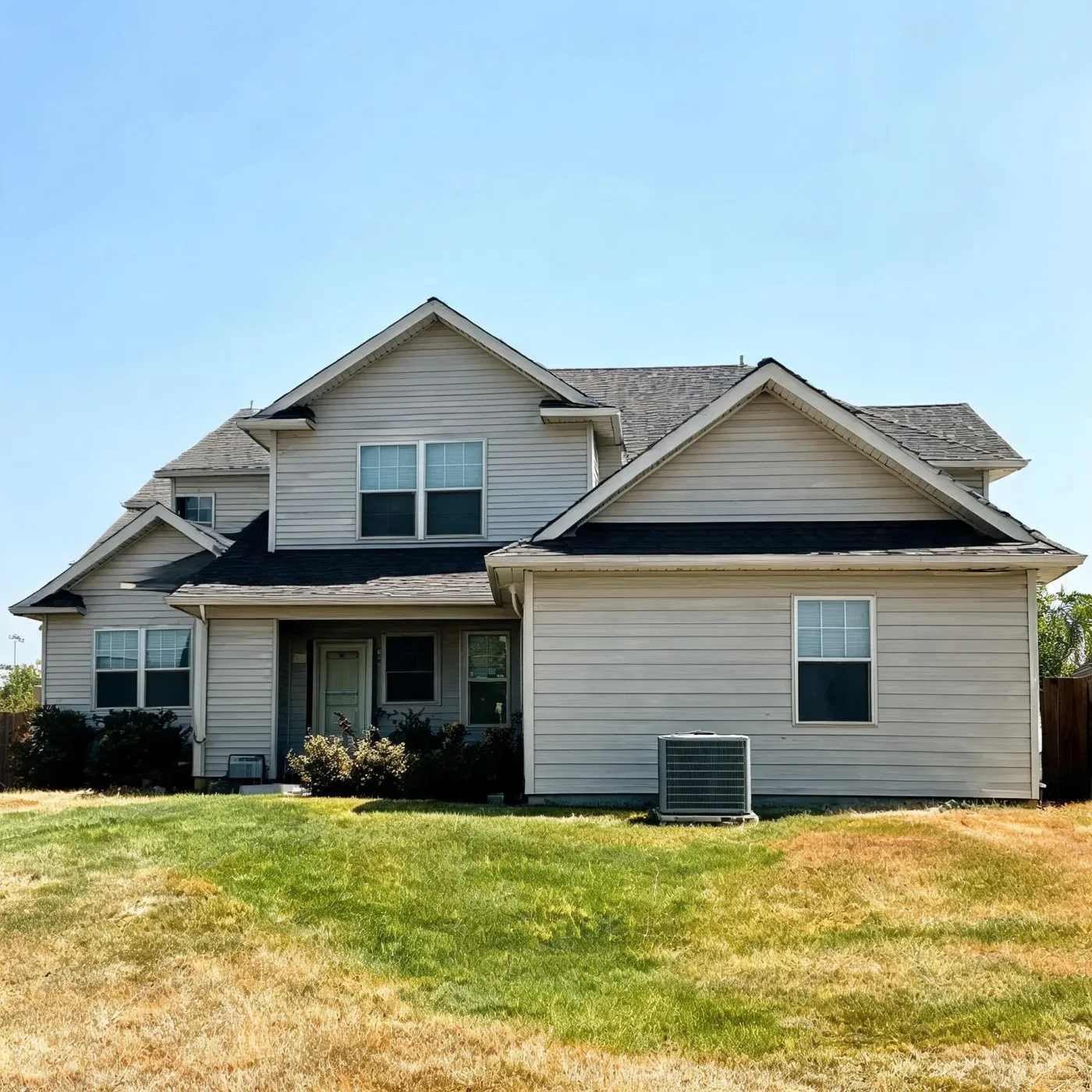
Two-story house with beige horizontal siding, gray shingled gable roofs and a covered front entry, with an outdoor air conditioning unit beside it and a partly dry grass lawn in front under a clear blue sky.

Summers here are dry, but winter air along the Wasatch Front is a different story. Averaged across June, July and August, the dew point sits at 41°F, a NOAA average, and that damp air is what feeds the frost on your outdoor unit once temperatures drop. Moisture in the air freezes onto the cold coil every time the system runs in heat mode. A working defrost cycle clears it off on schedule. When it doesn't, that same moisture keeps building instead, layer on layer, until the coil is sealed in ice and the unit can't pull heat from the air at all. If you're watching that happen right now, you don't have to spend the afternoon calling around and explaining the problem to one contractor after another. Send the form once and let a licensed pro take it from here.

NASA POWER T2MDEW county cells weighted by homes

Hand off the search today

Skip searching for a heat pump pro and answer a few questions instead.

It costs nothing to send, and you don't have to hire anyone.

What a Frozen Heat Pump Costs You

  • A heat pump stuck running flat out with ice building anyway will push your power bill up for days before you notice.
  • Iced-over coils block heat transfer, so your house runs colder than the thermostat says while the system keeps cycling.
  • Ice sitting against the fan blades or motor housing can bend a blade or strain the motor if it's left to keep freezing over.
  • A unit that won't clear itself will often fall back on backup heat strips, which cost more to run than the heat pump alone.
  • Ice that melts and refreezes around the base can crack the pad or pool water where it'll ice the concrete underneath it.
  • Left alone through a cold snap, a frozen unit can ice to the point where the cabinet or refrigerant lines take the strain.

Power here is cheap, but a heat pump that can't shake its ice doesn't know that. It just keeps running, compressor working against a coil that can't move heat anymore, and the only thing that goes up is the bill. You'll feel it before you see it: the thermostat says 70 and the house feels closer to 65, because that ice between the refrigerant and the outside air is blocking the transfer that's supposed to be warming your rooms. Most systems answer this by leaning on backup heat strips, and those cost more to run than the heat pump was ever meant to. Around the base, melt and refreeze cycles can crack the pad under the unit or leave standing water that ices the concrete. The motor and fan blades sit inside that ice too. A blade that's packed in can bend if it's forced to turn, or the motor can strain trying to push against the buildup. None of this happens in one cold morning. It's what a few days of a unit that won't clear itself adds up to; the frost that should melt off in an hour instead sits there, builds on itself, and starts putting weight on parts that were never built to carry it. By the time you notice the cabinet creaking or the lines under strain, the ice has already been working on your system for longer than you knew.

Power costs 13.02 cents per kilowatt-hour statewide

At 13.02 cents a kilowatt-hour, a heat pump stuck defrosting around the clock runs up real money fast, since it's pulling full power without actually heating your house. A stuck defrost cycle you catch in a day costs a lot less than one left running all week.

EIA-861 2025 statewide residential average

  1. Outdoor temperature drops and moisture in the air settles on the cold coil as frost.

  2. A sensor or timer on the defrost board detects the frost buildup.

  3. The reversing valve flips the system into cooling mode for a few minutes.

  4. Hot refrigerant runs through the outdoor coil and melts the frost off.

A closed silver laptop and a white cup of coffee on a saucer sit on a wooden table in front of a wooden chair, a plain beige wall, a potted leafy plant and a window with greenery outside.

Ice that melts on its own is fine. Ice that doesn't needs a repair.

A little frost on a cold Utah morning isn't a problem. A heat pump buried in ice, or one that clears and crusts right back over, has a defrost board, a sensor, or a reversing valve that isn't doing its job. That's a repair, not something that works itself out by spring.

Finding someone for it is its own chore: searching for a contractor who actually works on heat pumps, calling around to see who can get out there, explaining the same icing pattern over and over, then sorting through quotes to figure out who's worth calling back. Send the form once and that part is off your plate. Someone still has to look at the unit and fix what's wrong with it, but you won't be the one tracking down who that is.

A gray upholstered sofa with a beige cushion and knit blanket beside a curtained window, with a white mug and a book on a dark wooden table in the foreground and a lit lamp in the background.
A single-story stone-clad house with low-voltage path lights along a gravel bed and lawn at dusk, with a tree line and orange sky on the horizon.

Heat Pump Repair

Stop chasing a heat pump pro

Step 1 of 3: Equipment
  • A gray upholstered sofa arm with a cream knit fringed throw sits beside a wooden side table holding a stack of books, a shallow wooden bowl, and a ceramic vase of leafy branches, on a wood floor near a window.
    • Tell a local repair pro what your heat pump is doing.
    • Say what's going on with your heat pump, and a pro who works on them reaches out.
  • A living room corner with a cream upholstered sofa and cushion beside a wooden side table holding a ceramic vase of olive branches and a small dark bowl, with a framed landscape painting on the gray wall and a linen curtain at the window.
    • One request and the search for a pro is handled.
    • Send it once and finding someone is no longer on you.
  • A wood-framed armchair with a beige cushion and knitted throw sits beside a round wooden side table holding a ceramic mug, with a potted green plant near a window in the corner and a framed picture on the wall.
    • Describe what your heat pump is doing once, in one form.
    • Answer a few questions instead of calling shop after shop.
  • Interior corner with beadboard wainscoting, a gray cabinet with wood countertop holding a vase of greenery below a window, and a potted leafy plant in a woven basket on a wood floor with a fringed jute rug.
    • The pro who reaches out is licensed in Utah.
    • Only one pro gets your request, so you hear from one company.