 Find a pro near me
What size heat pump a Utah home needs
A local installer who puts in heat pumps gets your project.
A heat pump that's too big for your Utah home cycles on and off fast and never quite settles, and one that's too small runs flat out on the hottest July days and the coldest January nights and still falls behind. Getting the size right takes more than square footage. A contractor looks at your insulation, your windows, your ductwork, and how your house holds up against a hot dry summer and a cold winter, then runs the load calculation that tells you the actual number.
Since most homes here heat with gas, your heat pump is likely doing the cooling load more than the heating load, which changes what size makes sense for your house compared to a home that leans on the heat pump all winter. That's a detail worth getting right before anyone orders equipment.
You could spend a weekend calling contractors around Utah, explaining your square footage and your furnace setup over and over, and waiting on quotes that size the job differently depending on who you ask. Or you could answer a few questions once and get matched with a contractor who installs heat pumps and already knows what to ask about your home before showing up.
That contractor will look at your actual house, not a rule of thumb, and reach out to walk through what your home needs. No more repeating yourself to five different companies or sorting through quotes that don't agree with each other. You still have the installation ahead of you, but the work of finding someone who knows how to size it for a Utah home, with cheap power and gas heat and a dry hot summer, is the part that's handled.
What's below walks through how sizing actually works, so you know what the contractor should be checking and why the number isn't as simple as a chart based on your home's square footage.
What size heat pump do I need for my house in Utah?
You want a number, something close to "3 tons" or "4 tons" you can check against a quote. But the honest answer is that no one can tell you the right size without looking at your house. Square footage alone gets it wrong often enough that it's not worth guessing from.
It depends on a load calculation, not square footage
The size you need comes from a room-by-room load calculation, often called a Manual J, that accounts for your insulation, your windows, your ceiling height, and how much sun hits your walls and roof. Two houses the same size in the same Utah neighborhood can need different sizes if one has more south-facing glass or thinner attic insulation. Dry summer heat and cold winter nights both have to be covered, since the same unit runs your AC in July and your heat in January. A contractor who sizes it off square feet per ton alone is guessing, and a heat pump sized that way either short-cycles or can't keep up on the worst days of the year.

Dry heat changes the load math
Utah's dry summer air makes swamp coolers work in some homes, but a heat pump sizes off a different number entirely: the heat gain through your walls, windows and roof on the hottest afternoon. A contractor runs a load calculation room by room, not a square footage chart, because two houses the same size can need different tons depending on window placement and insulation.

Winter capacity matters here too
Most Utah homes heat with gas, but if your heat pump also covers winter, it has to produce enough heat at low outdoor temperatures, not just cool air in July. A unit sized only for summer can fall short on the coldest January mornings. That's one more reason a load calculation looks at both ends of the year, not just the number on the thermostat in August.
Sized Wrong Either Way
Oversized
- Short-cycles on and off instead of running steady, so it never pulls the moisture out of the air before shutting off.
- Hits the thermostat setting fast, then shuts down before it has run long enough to even out the temperature room to room.
- Puts more wear on the compressor since it starts and stops far more often than a properly sized unit would.
- Costs more to install than the size your house actually needs, with no gain in comfort to show for it.
- Leaves rooms farther from the air handler feeling stuffy even though the thermostat reads the right number.
Undersized
- Runs flat out on the hottest July afternoons and still can't keep up with the heat coming through your windows and roof.
- Falls behind on the coldest January mornings, leaving the house a few degrees under what the thermostat is set to.
- Stays on almost continuously during the worst stretches of summer and winter instead of cycling normally.
- Puts long hours on the compressor trying to close a gap it was never sized to close.
- Can leave backup heat doing more of the work than it should during the coldest snaps, since gas is what most Utah homes lean on anyway.
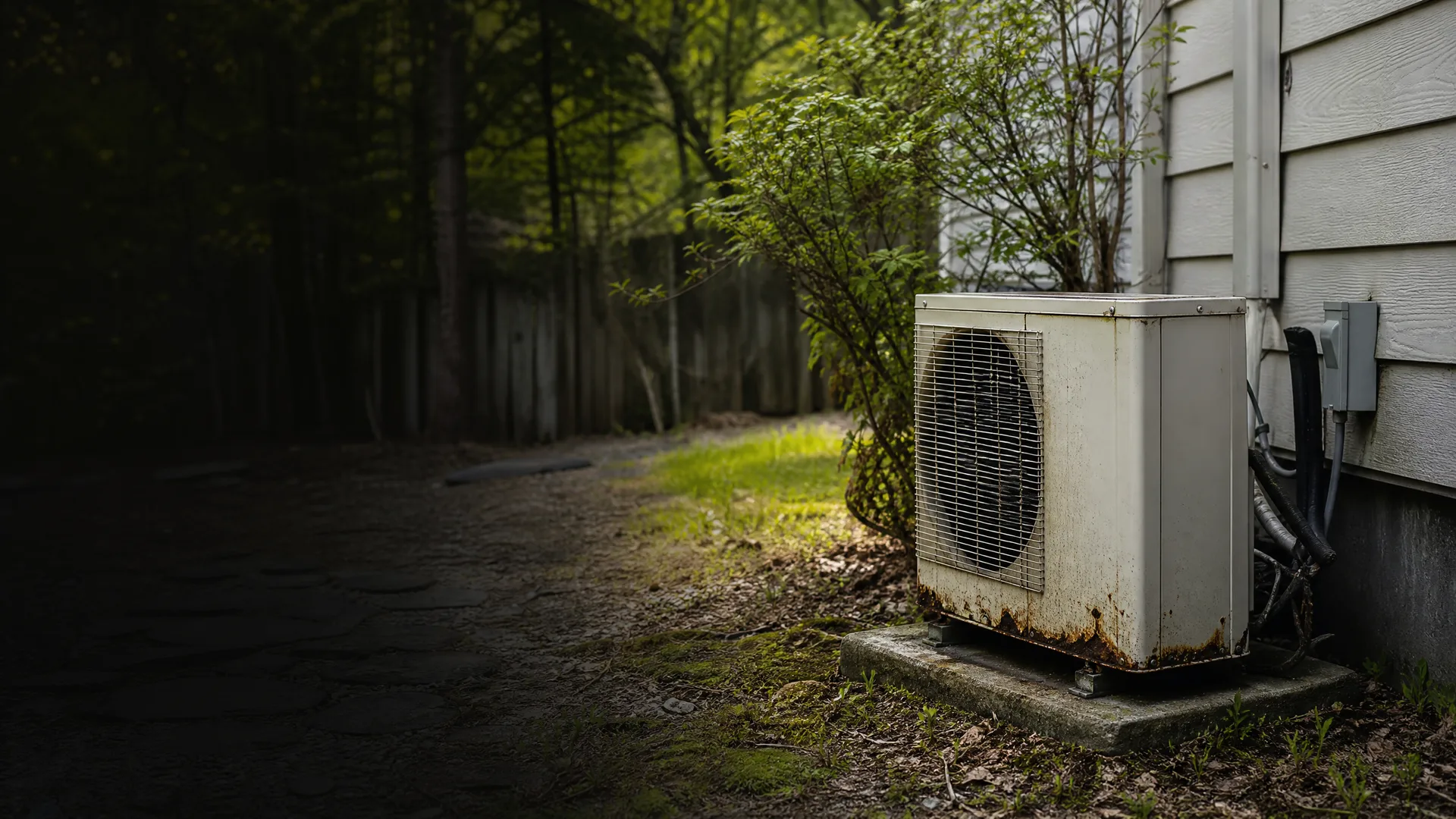
You're out in the side yard in April, coiling up the hose, and the old unit catches your eye. Rust has crept along the base, worse than you remembered from the fall. It still ran all winter without complaint, paired with the gas furnace the way it's always been, but looking at it now you wonder how many more summers it has in it before a hot July afternoon is the wrong time to find out. You've been meaning to get someone out to look at it properly, not just to quote a replacement off the unit sitting there, but to actually size what your house needs. You haven't made the call yet. You go back to coiling the hose.
Get the right pro for your heat pump
You've read enough by now to know a tape measure won't get you the right size, and that guessing wrong either way costs you comfort and money for as long as the unit's in the ground. A proper load calculation means someone walking your house, checking your windows and insulation, and running the numbers for a Utah summer afternoon. Finding a contractor who does that right, instead of pulling a number off your old unit's nameplate, usually means a string of calls, explaining your house to each one, and sorting through quotes that size the job differently because nobody actually looked. Since most homes here run on gas heat, the heat pump only has to carry you right on cooling, which makes getting the size right on that side even more worth doing once instead of guessing twice. Hand this one off and skip the calling around.
How a contractor actually sizes it
- A contractor runs a Manual J load calculation, adding up heat gain through walls, windows, roof and duct leakage room by room.
- The outdoor unit and the indoor coil have to match within the manufacturer's rated range, or the heat pump won't run at its listed efficiency.
- Heat pumps are sized in tons, and a quarter or half ton over or under changes how long the unit runs per cycle.
- Because most Utah homes heat with gas furnaces, the heat pump's sizing here is driven by the summer cooling load, not winter heat loss.
- A contractor checks the ductwork's airflow capacity, since a correctly sized unit still underperforms if the ducts can't move enough air.
- The refrigerant charge gets weighed in at the exact amount the manufacturer specifies for that line length, not just topped off.
The number on the quote comes from a process, not a guess. A contractor measures every room, checks the square footage of each window and which way it faces, and looks at how much insulation is in the attic and walls. That's the Manual J calculation, and it's what turns your house into a heat gain number for the hottest afternoon of the year. Since most homes here run gas furnaces, the heat pump only has to handle cooling, so that summer number carries the sizing instead of winter heat loss the way it might elsewhere.
Once the load number is set, the equipment has to match it closely. Heat pumps come in half-ton and full-ton increments, and the outdoor condenser has to pair with an indoor coil the manufacturer rates for that same range. Mismatch the two and the unit won't hit its rated efficiency even if the tonnage looks right on paper.
None of that matters if the ductwork can't keep up. A contractor checks whether the existing ducts can move the air a new unit needs, because undersized or leaky ducts choke a correctly sized heat pump the same way a clogged filter does. Last, the refrigerant gets charged to the exact weight the manufacturer specifies for the length of line running between the units, not just filled until the gauge looks right.




A contractor who sizes off square footage alone might land on 3 tons for a house that actually needs 3.5, because two homes at the same size can lose heat through the walls and windows at different rates.
A load calculation catches that difference before the unit ever gets installed, so the ton size on the quote matches what your house actually loses on a cold January night, not just its floor plan.



Utah summers feel dry, and the numbers back that up. Averaged across homes here, the summer dew point sits at 41°F, which is low enough that sweat evaporates fast and the air rarely feels heavy. That changes what your heat pump is actually fighting. In a muggy climate, a chunk of its job is wringing moisture out of the air. Here, it's mostly just lowering the temperature, since the air isn't holding much water to begin with. A correctly sized unit will cool the house without needing to run long cycles for moisture removal, so if yours short-cycles on a dry 95-degree afternoon, moisture isn't why. Source: regional climate normals for Utah.
NASA POWER T2MDEW county cells weighted by homes


Power costs 13.02 cents per kilowatt-hour statewide
At 13.02 cents a kilowatt-hour, running a heat pump here doesn't punish your bill the way it might elsewhere. That matters for sizing: a slightly larger unit costs less to run in Utah than in a state with pricier power, so a contractor has more room to size for comfort without the electric bill driving the decision.
EIA-861 2025 statewide residential average


The right size for your heat pump comes from a load calculation, not a square footage chart, and that's the number worth having before anyone sets a unit in your yard. You've seen what guessing wrong costs: short cycles that leave the air sticky, or a unit that runs flat out on the hottest July day and still can't keep up. Instead of searching through contractors on your own, calling a handful to see who even does load calculations, explaining your house and your old system over and over, then sitting with a stack of quotes trying to tell them apart, you can skip straight to a contractor who already does this work and will reach out to you directly. That leaves you with one thing to do: walk your house with someone who knows how to size it right, and let the number come from that, not from a guess.

A pro who works on heat pumps
One form replaces the calls you'd make to find a heat pump pro.