Send the request today and let a heat pump pro reach out to you.
Your heat pump's thermostat has a setting called emergency heat, and if you're looking at it right now, something is wrong with the heat pump itself. It's not a setting for extra-cold nights. It's a backup that runs the house on the system's electric strip heat alone, bypassing the heat pump completely, because the heat pump can't move heat the way it's supposed to.
In most of the country that backup is a fallback for the coldest days of winter. In Utah, where most homes heat with gas, a heat pump running emergency heat is usually a sign the outdoor unit has stopped working, not a sign the weather beat it. Frost built up and didn't defrost, the compressor won't start, something tripped. The strip heat keeps the house warm while that sits broken.
Power here is cheap compared to a lot of places, but strip heat still costs more to run than a heat pump that's actually working. Leaving it on emergency heat for days isn't a fix. It's a way to stay warm while you get the real problem looked at.
That part, the looking into it, is usually the slow part. Calling around to find someone who works on heat pumps, waiting on hold, explaining the model and the error and what the thermostat says, then doing it again for a second quote. None of that makes your house warmer.
Send the form on this page and that search is done. You're not the one hunting down a contractor who's free, available, and knows heat pumps. Someone qualified gets your information and the job of sorting out why your system needs emergency heat stops being something you have to chase. The weight of finding help comes off here. What's actually wrong with the unit still has to get diagnosed, but you won't be the one making the calls to get there.
Emergency heat means the heat pump has stopped moving heat and the system has switched to electric strip heat instead. That switch happens on its own when the outdoor unit can't do its job, usually because of a frozen coil, a dead compressor, or a motor that won't run. The strips will keep the house warm, but they cost far more to run than the heat pump itself, since they're heating the air directly rather than pulling heat from outside. If you flipped the switch to emergency heat yourself because the house felt cold, that's worth checking, since it means the heat pump wasn't keeping up before you touched anything. Either way, the heat pump needs a look. Running on emergency heat for a night while you sort out a repair is fine. Leaving it there for weeks is not something you want on your power bill.
Your thermostat has two jobs tied together in one switch. One side calls for heat, the other decides where that heat comes from. Emergency heat overrides the second part, telling the system to ignore the outdoor unit completely and run on the electric strip heat built into the air handler instead. That strip heat doesn't move warm air in from outside the way the heat pump normally does. It makes heat the same way a toaster does, by running electricity through metal coils until they glow. Your blower still pulls air across those coils and pushes it through the same ducts it always has, so the house still gets warm air out of the vents. What's different is how that warmth gets made. A heat pump relocates heat that's already in the outdoor air. Strip heat generates it from scratch, which means it pulls a lot more electricity to raise the house to the same temperature. If the outdoor coil has iced over or the compressor has failed, there's no heat left outside to move, so this backup is what keeps the house warm until that gets fixed.
How Emergency Heat Actually Works
The thermostat has two separate switches inside it, one that calls for heat and one that picks the source, and emergency heat overrides the second one.
Flipping it tells the system to skip the outdoor unit entirely and run only the electric strip heat mounted inside the air handler.
Strip heat works by passing electricity through metal coils that glow and heat the air directly, the same principle as a toaster.
A heat pump moves heat from outside air into the house, so when the outdoor coil ices over or the compressor quits, there's nothing left to move.
The indoor blower still pulls air across those electric coils and pushes it through your ducts the same way it always has.
Because strip heat makes warmth instead of relocating it, it draws far more electricity to produce the same temperature rise.
Answer a few questions instead of calling shop after shop.
No charge to send it. You decide if you hire them.
Heat pump running the way it should
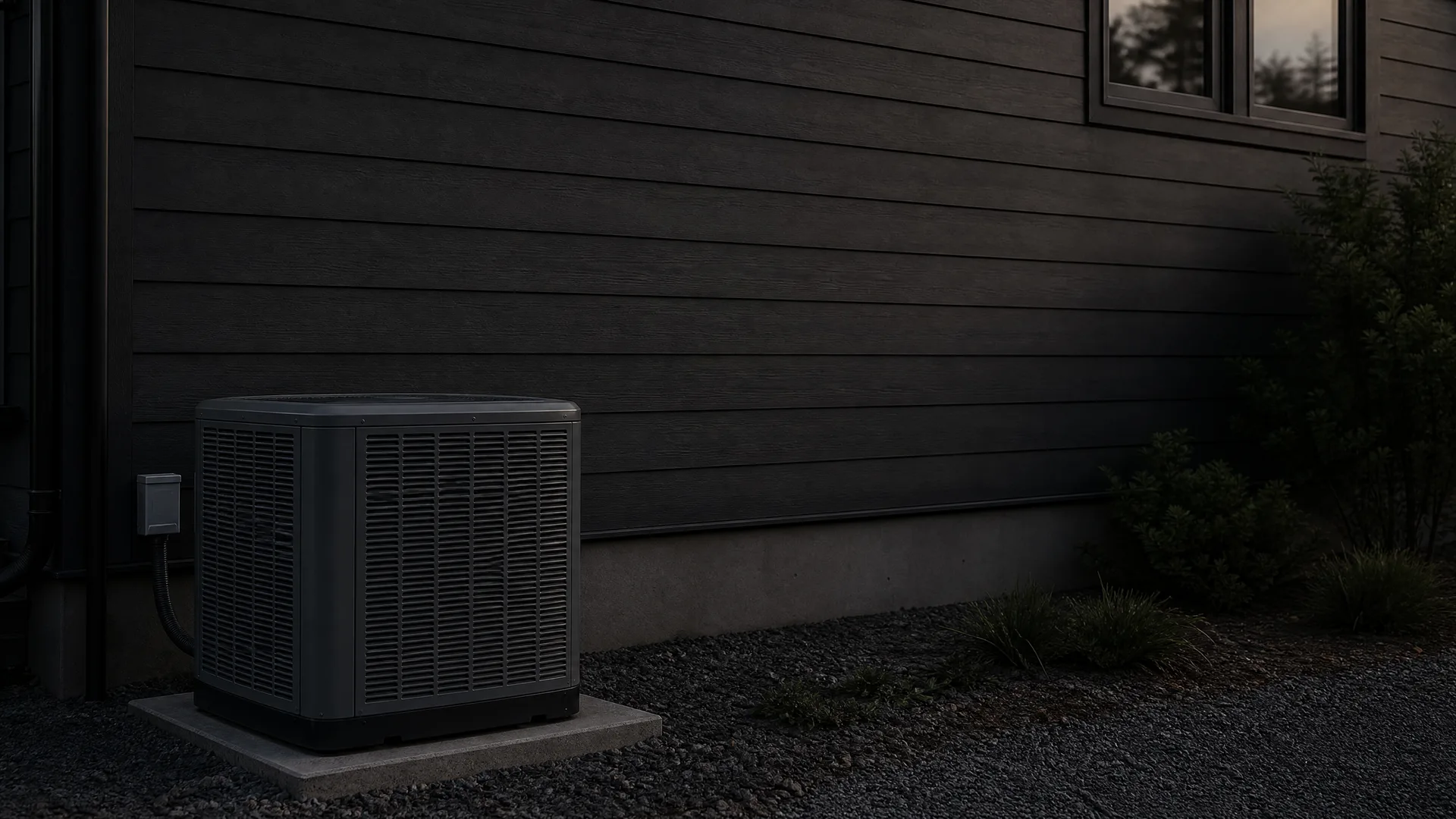
The outdoor unit sits clean on its pad, fins clear, fan turning. It's pulling heat from the outside air and moving it inside. No ice on the coil, no strip heat running, and the thermostat shows normal heat, not emergency heat.
Heat pump that's lost the job
Dirt has built up across the fins and the coil behind them can't pull heat from the air anymore. The compressor may still run, but the house warms on strip heat alone now. That's what put emergency heat on the thermostat.
Why does my outdoor unit look frozen over
Go look at the outdoor unit. If it's running on emergency heat, you'll likely find ice built up across the coil, sometimes thick enough to cover the fins completely, with the fan either stuck or barely turning. That ice is why the system gave up and switched over. Inside the house, you'll notice the air coming from the vents is warm, since strip heat makes real heat, but your power bill for that month will run higher than a normal month because electric strip heat costs more to run than the heat pump. Left alone too long, a compressor that's struggling under ice can fail outright, turning a repair into a full outdoor unit replacement.
Summer air in Utah sits at a dew point that averages 41°F across June, July and August, measured at weather stations around the state. That's dry air. It matters here because dry air holds little moisture for the heat pump's outdoor coil to pull out, which keeps the coil running clean through summer. The trouble shows up on the other end. A coil that stays clean all summer isn't what freezes it in winter. If you're seeing ice on that coil now and the thermostat reads emergency heat, look at the refrigerant charge or the defrost control, not anything left over from July.
NASA POWER T2MDEW county cells weighted by homes
Why does my heat pump keep switching to emergency heat on its own?
You didn't touch the thermostat, but it's sitting on emergency heat anyway, and it keeps happening. That's not a glitch. The thermostat only switches over when something tells it the outdoor unit can't be trusted to run, and it's worth knowing what's actually making that call before you decide whether this is a quick fix or something that needs a tech out to the pad.
The system is switching itself because the outdoor unit is tripping a safety
A heat pump's control board watches the outdoor unit for signs of trouble, a coil that's iced over, a compressor drawing too much current, a sensor reading something it shouldn't. When it sees one of those, it shuts the outdoor unit down and switches to the electric strip heat on its own, the same move you'd make by hand with the thermostat switch. It does this to protect the compressor, which is the expensive part. If it's happening on its own and repeating, something out at the unit is tripping that safety every time, not just once. That's a sign worth having someone look at, because the strip heat will keep the house warm, but it isn't running the heat pump the way it's supposed to.
1
The outdoor coil ices over or the compressor stops moving heat at all.
2
Sensors inside the heat pump tell the control board the outdoor unit failed.
3
The thermostat drops the outdoor unit and switches the call to strip heat.
4
Electric strip heat inside the air handler takes over heating the house.
Power costs 13.02 cents per kilowatt-hour statewide
At 13.02 cents a kilowatt-hour, running strip heat instead of the heat pump shows up on your bill fast. Strip heat is pure resistance heating, no transfer, so it draws a lot more power than the outdoor unit ever did. The longer it stays stuck on emergency heat, the more that difference costs you.
EIA-861 2025 statewide residential average
Working normally
The outdoor unit sits quiet on its pad, fan turning, coil clear. It's pulling heat from the outside air and sending it in through the ducts. The thermostat reads normal heat, strip heat is off, and your bill reflects a heat pump doing the job, not resistance heat covering for it.
Stuck on emergency heat
The fan outside has slowed or stopped, and the coil behind it is carrying ice instead of moving heat. Inside, the strip heat is doing all the work the compressor should be doing. The house stays warm, but only because the thermostat gave up on the outdoor unit.
Emergency heat means the heat pump isn't the one heating your house
The thermostat switched to strip heat because the outdoor unit stopped working, whether that's a frozen coil, a dead compressor, or a motor that quit. Strip heat will keep the house warm while it runs, but it's not a fix, and your bill at 13.02 cents a kilowatt-hour will tell you so within a few days. The heat pump needs a contractor to look at the outdoor unit before it switches back on its own.
You don't have to find that contractor yourself. No searching through listings, no calling three or four companies to see who answers, no explaining the ice on the coil and the thermostat reading again to each one, no sitting with quotes trying to guess which number is fair. Send the form once and that part of this is off your plate.