10 years
Past that age, a heat pump in Utah is working against hot dry summers on a compressor that's already logged a decade of run time. Replacement is the safer bet.

A heat pump worth repairing is usually one still under 10 years old, where the fix is a single part like a reversing valve or a capacitor. Past that age, or with a failing compressor, replacement is the better call, because Utah's hot dry summers and gas-heated winters mean the unit runs hard on the cooling side most of the year. Here most homes lean on gas furnaces for heat and use the heat pump mainly to cool, so a repair bill has to be weighed against a machine that's already worked through a lot of summers. A technician checks the refrigerant charge, the compressor, and the age on the nameplate before telling you which way to go. If the unit is old enough that a major part failing now means another one failing next summer, replacing it once instead of paying for repairs twice is usually what saves you money. Either way, the answer depends on what's actually broken and how old the unit is, not a guess.


A heat pump doesn't burn anything to make heat. It moves it, using a reversing valve to switch refrigerant flow between cooling your house and warming it. That valve fails on its own sometimes, and when it does, replacing just that part can bring the whole system back. In winter the outdoor unit collects frost, so it pauses every so often to run a defrost cycle. You might hear the fan change pitch or notice steam coming off the coil. That's normal. What's not normal is a unit that hums without starting. That usually points to a weak capacitor, the part that gives the compressor and fan motors their initial jolt. Utah summers run the compressor hard for months, so capacitors and the compressor itself wear faster here than they would somewhere with a shorter hot stretch. Refrigerant is a different story. It runs in a closed loop and shouldn't ever need topping off. If a system is low, there's a leak somewhere in the line. And if the compressor itself goes, the cost of replacing it alone rarely makes sense next to putting that money toward a new system.




Past that age, a heat pump in Utah is working against hot dry summers on a compressor that's already logged a decade of run time. Replacement is the safer bet.
Utah power rates keep a heat pump's cooling side affordable, but most homes here lean on gas for winter. A new unit should fit how you actually heat, not just cool.

This is a heat pump holding up. The coil fins are clean, the pad is clear, and the lines running up to the disconnect are intact. A unit like this cycles on and off evenly and earns a straight repair when something electrical fails.

This cabinet has taken its share of Utah summers. The casing is weathered, the fins around back catch leaves and dust, and the conduit and disconnect have aged along with it. A unit showing this much wear is closer to a compressor failure than a fixable part.
You've probably noticed the house takes longer to cool down than it used to, or the unit runs almost nonstop through the hot part of the day. Maybe it short cycles, kicking on and off every few minutes instead of running a steady stretch. Outside, you might hear a hum with no air moving, or notice the fan isn't spinning at all. Some homeowners catch a burnt smell near the outdoor unit, or see ice on the lines in weather that's nowhere near freezing. Left alone, a struggling compressor or a bad capacitor tends to get worse, not better, and a heat pump that's working harder than it should will show up on your power bill before it finally quits for good.



A summer dew point of 41°F is dry air, the kind that makes your heat pump's job easier than it would be almost anywhere else. Low humidity means the coil sheds heat fast and the compressor doesn't have to run as long to pull the house down to temperature. That's the Utah climate data talking, not the unit. But dry air also means dust, and dust is what coats the outdoor coil fins and makes a compressor work harder than it should for its age. When you need a second opinion on whether that's a repair or a real problem, you're matched with one licensed contractor local to Utah, someone who sees this exact strain on heat pumps every summer and knows what to check first.
NASA POWER T2MDEW county cells weighted by homes
If your heat pump is past the point where one part explains the problem, or the compressor itself is what's failing, the next step is finding someone to put in the new unit. That part doesn't have to sit on your list. A licensed Utah contractor who works on heat pumps all year, through the dry heat of summer and the defrost cycles of winter, already knows what tends to go first in a unit that's logged a decade or more here, and what sizing makes sense against cheap power and a house that likely heats with gas. Send the request and it goes to that one contractor, not a handful competing for your attention. You've already spent enough time watching the unit run too long or not keep up. Let someone who installs these for a living take it from here.
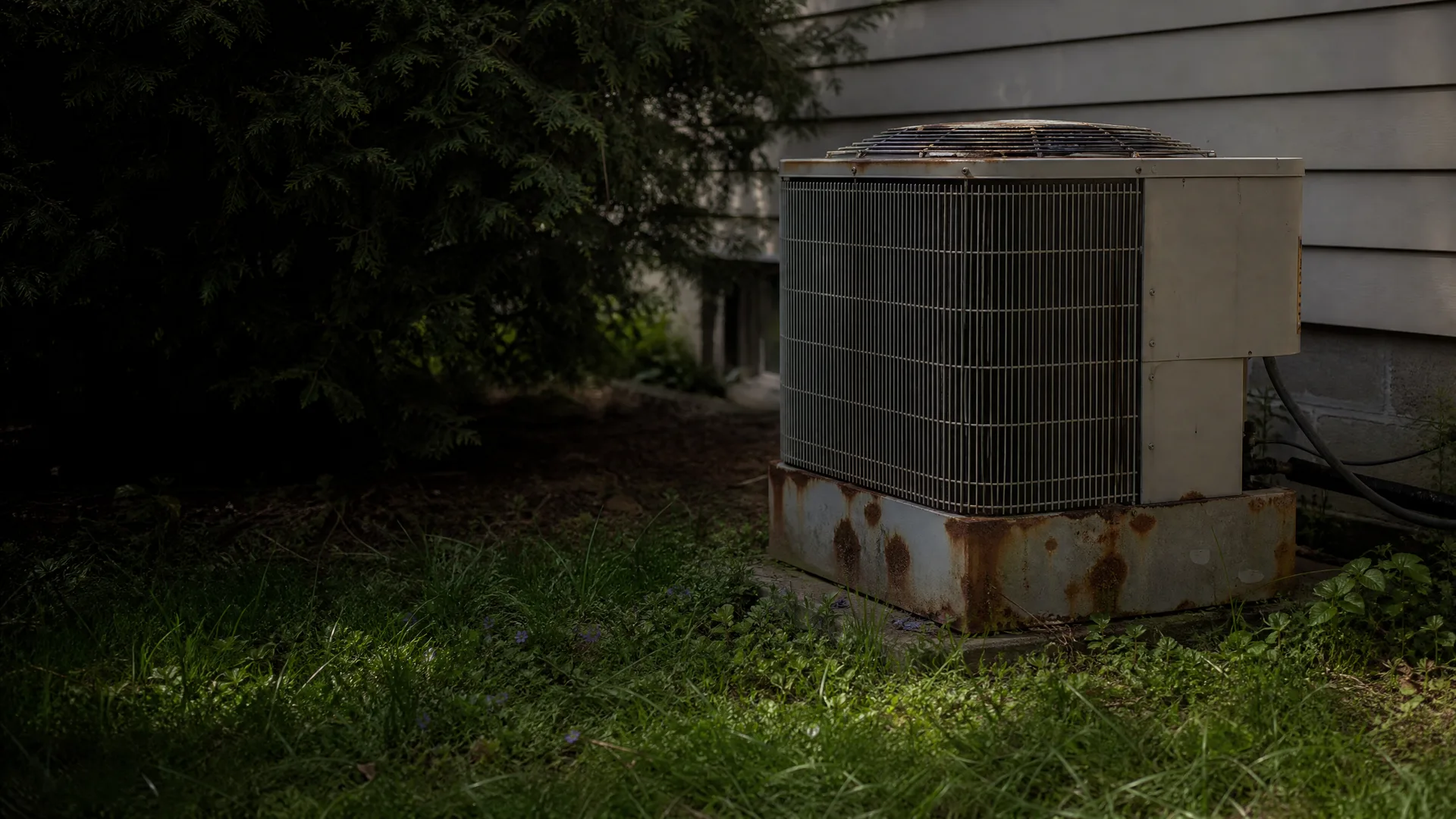
You walk out to the side yard to turn on the hose and the unit is right there in the morning sun. Rust runs along the base where the cabinet meets the pad, a line of it following the seam. Leaves from last fall are still packed against the bottom louvers. You crouch down and the fins look fine, no dirt, no bent spots, but that rust line bothers you. It's been running fine so far this spring. You stand back up, turn the water on, and head back inside, telling yourself you'll have someone look at it before the heat sets in.
At 13.02 cents per kilowatt-hour, running your heat pump's compressor through a long hot stretch doesn't hit your bill the way it would somewhere with pricier power. That's part of why replacing an aging unit here pays off faster than the upfront cost might suggest.
EIA-861 2025 statewide residential average
A capacitor, a defrost board, a reversing valve stuck in one position. These are the repairs that make sense on a heat pump that's otherwise sound. The compressor still runs fine, the coil still shows clean fins, and the fix is a part swap rather than a teardown. A contractor who sees these units every season can usually spot which part failed from how the system is acting, whether it's short cycling, blowing warm, or not switching over between heating and cooling. If the rest of the unit checks out, there's no reason to replace what isn't broken.
Once the compressor is the problem, or the unit has logged a decade of summers against Utah's heat, replacement stops being the cautious choice and becomes the practical one. A new heat pump sized right for your house runs steadier through July and August, and it isn't carrying the wear an older compressor already has. Installation is its own job, separate from a repair call, and it's worth having someone local handle the sizing and the setup rather than matching whatever was there before. Get that part wrong and the new unit struggles the same way the old one did.


The answer comes down to age and what broke. A heat pump under 10 years old with a bad reversing valve or capacitor is worth fixing. One past that mark, or one with a compressor on its way out, costs more to nurse along than to replace, especially with Utah's cheap power making a new unit's cooling costs easy to live with. Either way, the next move is the same: get someone licensed to look at the unit and tell you which side of that line it's on.
That's where a local contractor earns the trust. Someone who services heat pumps through a Utah summer has already seen the reversing valve stuck mid-cycle, the capacitor that gave out in July, the compressor that finally quit after a decade of hot dry air pulling against it. They know which of those is a quick fix and which one means talking replacement before the next heat wave. You're not explaining your situation from scratch. They've seen it on the unit next door.
Sending one request means one contractor calls, working from what you've told them about your unit, not a handful of companies all pitching their own answer before anyone's looked at the equipment. You get one assessment from someone who actually knows what tends to fail on a heat pump running in this climate, and a straight answer on repair or replace once they've seen it firsthand.





Your request goes to one pro, not a list of companies.
No fee to send it, and nothing to sign.