Profile view of a bearded man wearing a dark green baseball cap and a dark gray T-shirt against a plain light background.

How long heat pumps last in Utah

Step 1 of 3: Equipment

How long do heat pumps last in Utah?

Your heat pump handles both heating and cooling, and you're wondering how many years you've got before it needs replacing. With gas furnaces common in a lot of Utah homes, heat pumps don't come up in conversation as often, so there's less sense of what's normal for how long one should run before it starts giving out.

Most heat pumps last 15 years

A heat pump in Utah typically runs 15 years before it needs replacing, sometimes longer. The compressor does the heaviest work, running on hot, dry days all summer and again through the cold months, since the same unit handles both. That dual duty is the main difference from a straight AC system, which only runs half the year. In homes here that heat with gas and use the heat pump just for cooling, the compressor gets a break for several months, and that can stretch its life closer to 18 or 20 years. If yours runs double duty, year round, expect it to wear toward the lower end of that range.

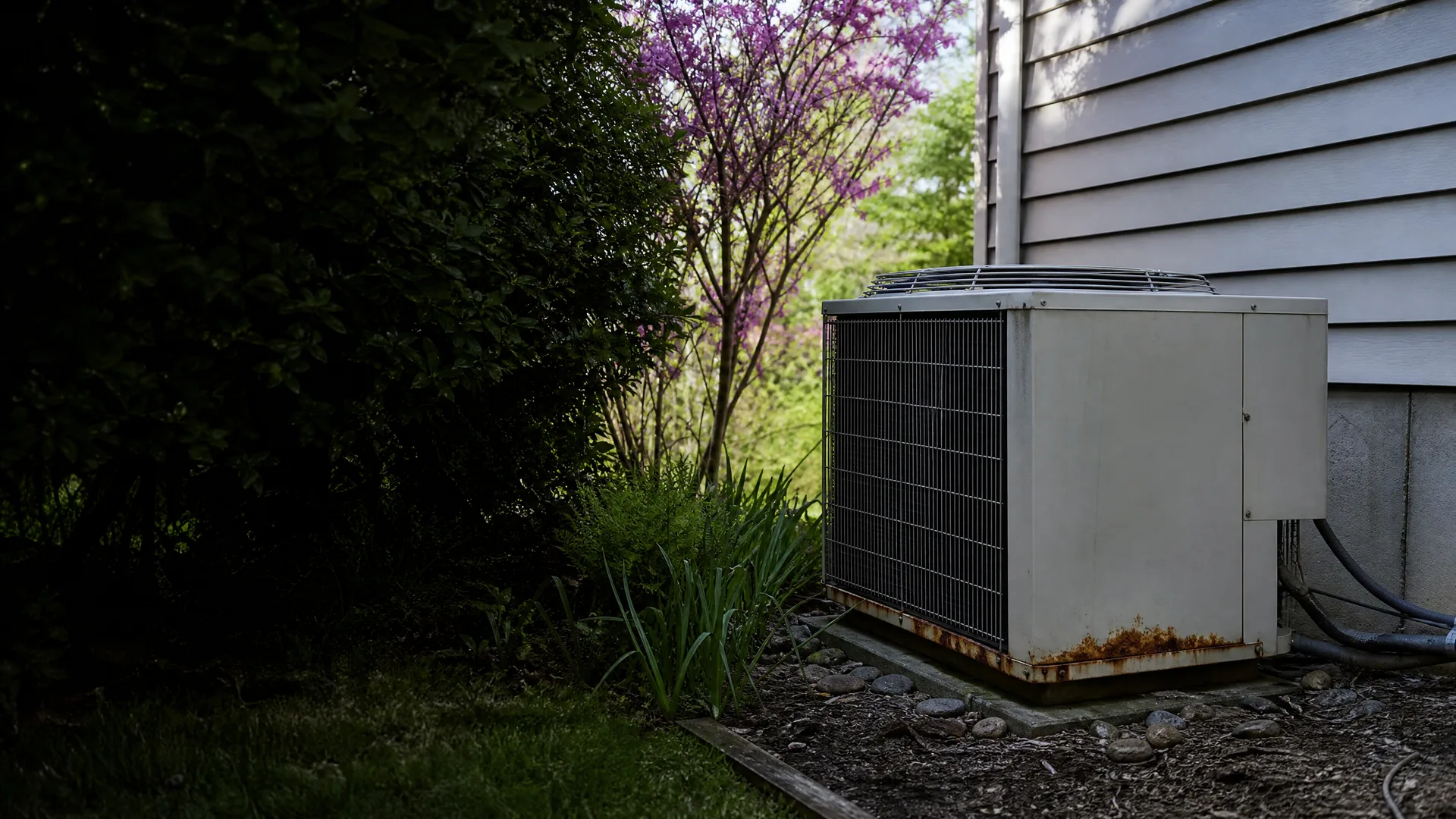
An outdoor air conditioning condenser unit with rust streaks sits on a concrete pad beside a light-colored lap-sided house, surrounded by shrubs, gravel and a flowering tree.

You're out in the side yard in April, coiling up the hose you left out all winter, and you notice the outdoor unit for the first time in months. Rust has worked its way along the base, past the paint, into the metal itself. The fan blades look fine. The coil looks fine. It's just that bottom edge, soft and orange where it used to be gray. You give the cabinet a push and it holds, so it's not about to fall apart. But you stand there a minute, doing the math on how many summers this one's actually got left, before you go back to the hose.

One System or Two

Runs year-round

  • In Utah, your heat pump works through hot, dry summers and cold winters, so it logs more hours a year than a system that only cools or only heats.
  • The compressor cycles on both sides of the year, which means more total run time wears on the same set of parts.
  • Defrost cycles in winter put the reversing valve and outdoor coil through extra strain that an AC-only system never sees.
  • Dust and grit from dry summer air settle on the outdoor coil, and that coil has to stay clean for the unit to heat and cool well.

Gas furnace and AC

  • A furnace only runs in winter, so it sits idle through the hot months and racks up fewer hours over a year.
  • The AC side only runs in summer, so each piece of equipment carries half the load a heat pump carries alone.
  • With gas common in Utah homes and power cheap, a furnace burns gas for heat instead of leaning on a compressor through the cold months.
  • Two separate systems mean a failure in one, like a bad igniter in the furnace, doesn't touch the other side's ability to keep the house cool.
  1. Refrigerant absorbs heat from outside air or your indoor air.

  2. The compressor pressurizes that refrigerant and raises its temperature.

  3. A reversing valve decides whether you get heat or cooling.

  4. The indoor coil releases or pulls heat into your ductwork.

A man with grey hair and stubble in a dark sweater sits on a grey sofa indoors, looking off to the side, with a potted plant and a sunlit window behind him.
A man with gray hair, a beard and glasses, wearing a dark green sweater, sits on a gray sofa in a sunlit living room with a potted plant, table lamp and wooden sideboard behind him.
A middle-aged man with graying hair and a short beard sits on a blue sofa in a living room, looking toward a window, with a bookshelf, lamp and framed picture in the background.
A man with graying curly hair and a dark green sweater sits on a gray sofa in a sunlit living room, looking off to the side, with a framed picture, shelving, an armchair and a window with sheer curtains behind him.
A dark gray outdoor condenser unit on a concrete pad beside a house with horizontal lap siding, with mulch beds, shrubs, and lawn nearby and conduit running to a wall-mounted box.

Skip calling around

One installer gets your project, so there's no bidding war over it.

Skip the round of in-home estimates for a new heat pump.

Skip calling around

There's no charge for the request.

Is your heat pump already telling you it's wearing out?

You might have noticed your heat pump runs longer than it used to, especially on the hottest summer afternoons, before it brings the house down to temperature. Maybe it's cycling on and off more than it should, or you've caught a burning smell when it kicks on, or the air coming out doesn't feel as cold as it used to. Ice building up on the outdoor unit in winter, when there shouldn't be any, is another sign. None of this means the system is done. But a heat pump that's struggling to keep up usually costs more to run every month, and if the compressor is what's failing, that's the most expensive part to replace. Left alone too long, a strained system can quit in the middle of a heat wave or a cold snap, when you need it most.

A gray outdoor condenser unit sits on a concrete pad beside a house with horizontal lap siding, with a wall-mounted disconnect box and refrigerant lines, mulched beds and a shrub nearby, and a concrete walkway in the foreground.

Unit running clean

A heat pump sitting in mulch beds like this, with the conduit tight and the pad level, is doing what it's built to do. Nothing on the outside is working against it. Set up right and kept clear of debris, it can run its full years without surprises.

An outdoor air conditioner condenser unit on a concrete pad beside a light gray vinyl-sided house, with an electrical disconnect box and conduit on the wall and bare soil in the foreground.

Unit under strain

Lines running loose to the disconnect, a pad that's shifted, siding too close to the cabinet. None of this stops a heat pump overnight, but it cuts into the years you'd otherwise get. Worth having someone who installs these look at it before it becomes the reason for an early replacement.

A woman with shoulder-length brown hair wearing a beige knit cardigan sits in a gray upholstered armchair near a window, looking off to the side with a slight smile, with bookshelves blurred in the background.
A woman and a sleeping child wrapped together in a cream knitted blanket on a couch, with a potted plant, framed photo and lit lamp in the background.

What installation gets right

A heat pump set level on a solid pad, with the right refrigerant charge and clearance around the cabinet, runs the way it was built to. The coil gets the airflow it needs, the compressor isn't straining against a bad charge, and nothing is rubbing or pulling loose before its time. Utah's dry summers mean the outdoor unit works hard for months without the humidity that speeds up corrosion elsewhere. Get the install right and that heat is working for you, not against the equipment. A unit put in correctly has a real shot at running its full years without a major repair.

What a bad install costs you

An undersized line set, a sloppy refrigerant charge, or a unit set too close to a wall can shorten a heat pump's life no matter how good the equipment is. The compressor works harder than it should every time it cycles, and that extra strain adds up over the years you own it. A reader looking for a local contractor who installs these year-round, knows the common mistakes, and can get the charge and the clearances right the first time doesn't have to call around to three companies and compare bids to land on someone qualified.

An outdoor condenser unit sits on a concrete pad beside a house with horizontal vinyl siding, with a gray electrical disconnect box and conduit on the wall and a shrub at left.
Before you get your heat pump installation
A gray outdoor condenser unit on a concrete pad beside a light-colored horizontal-siding house, with a disconnect box and refrigerant line on the wall, ornamental grasses and a shrub in mulch nearby, and a concrete patio in the foreground.
After you get your heat pump installation

Replace at the first sign of trouble

A heat pump that's struggling gets patched, then patched again. Each repair costs you, and you're still looking at the same worn compressor and coil down the road.

Fill out one form

Install done right the first time

A licensed local contractor who works on heat pumps all year knows what tends to fail in Utah's heat and cold, and sets the unit up so it runs its full years without surprises.

Fill out one form

Power costs 13.02 cents per kilowatt-hour statewide

At 13.02 cents a kilowatt-hour, running your heat pump here costs less than it would in a lot of other states. That's one more reason to get the install right, since a unit with a bad charge or poor airflow still burns through more power than it should, cheap rate or not.

EIA-861 2025 statewide residential average

A heat pump in Utah runs about as long as a central air conditioner would, usually somewhere in the range a well-kept system reaches, and what decides where in that range yours lands is the install and the upkeep more than the weather. You've seen what wears it down and what doesn't. A rusted cabinet or a bad charge cuts years off. A level pad, clean refrigerant charge, and good airflow let it run its full stretch. When you're ready to install, a licensed Utah contractor who works on heat pumps all year, not just the handful of gas furnace calls most of the state keeps them busy with, already knows what tends to fail first on this equipment and how to set it up so it doesn't. You get matched with that one contractor, not a list of five to sort through and call back. No phone tag, no retelling the problem to a different voice each time. Just someone local who sets it up right the first time.

A gray outdoor air conditioner condenser unit on a concrete pad beside a house with horizontal lap siding, with an electrical disconnect box and conduit on the wall, a downspout, gravel edging and a green lawn with trees to the right.

No phone calls to make

Skip the search

Only one pro gets your request, so you hear from one company.

Asking costs nothing, and the choice to hire stays yours.